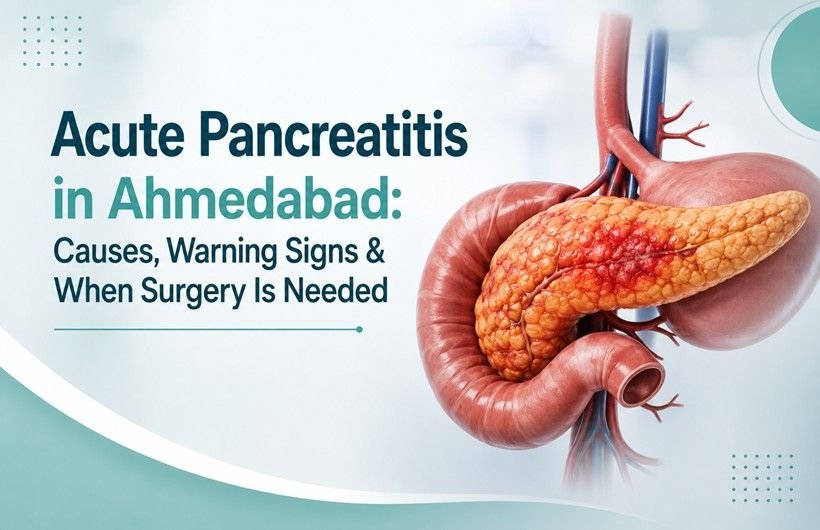
If you’ve had sudden, sharp pain in your upper stomach that won’t ease no matter how you sit or lie down, and it came on within hours of a heavy meal or a night of drinking, you may be dealing with acute pancreatitis. It’s more than a bad case of indigestion, and treated late, it can become dangerous. As a pancreatitis treatment in Ahmedabad specialist, this is one of the conditions we see patients delay seeing a doctor for the longest, usually because they assume it’s just gas or acidity. As a gastro surgeon in Ahmedabad, our first job is to help you tell the difference quickly, because that difference changes how urgently you need care.
What Is Acute Pancreatitis, and Why Does It Come On So Suddenly?
Your pancreas sits behind your stomach and makes the digestive enzymes and insulin your body needs every day. Normally, those enzymes only switch on once they reach your small intestine. In pancreatitis, they activate too early, right inside the pancreas itself, and start digesting the organ’s own tissue.
That’s why the pain feels so different from ordinary indigestion. It’s not a dull ache that comes and goes with meals. It’s a steady, boring pain in the upper abdomen that often spreads straight through to your back, and it tends to get worse rather than better over the following hours.
Most cases are acute, meaning they flare up suddenly and, with prompt treatment, settle within a week. A smaller number of patients go on to develop chronic pancreatitis, where the inflammation keeps returning and gradually damages how the pancreas functions.
What Causes Pancreatitis in Ahmedabad Patients?
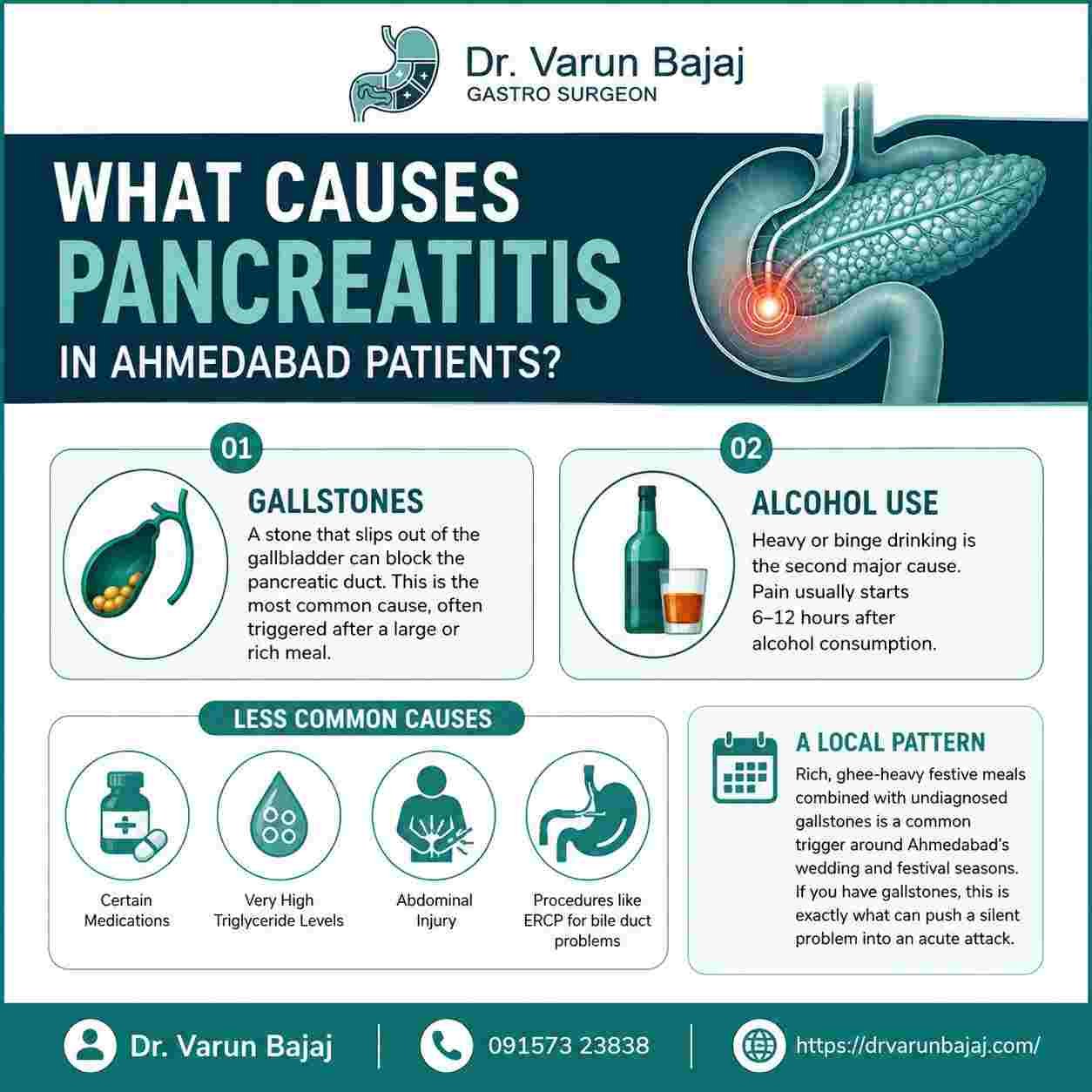
In our experience, two causes account for the large majority of cases we treat locally.
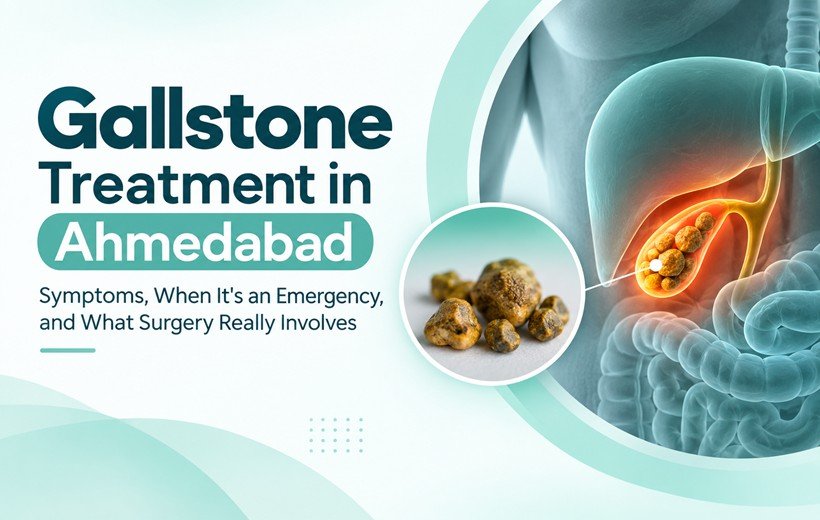
- Gallstones. A stone that slips out of the gallbladder can block the shared duct the pancreas uses to drain its enzymes. This is the single most common trigger we see, and it often follows a large or particularly rich meal.
- Alcohol use. Heavy or binge drinking is the second major cause. Pain from an alcohol-related attack typically starts six to twelve hours after drinking.
Less commonly, pancreatitis can follow certain medications, very high triglyceride levels, abdominal injury, or a procedure like ERCP used to treat bile duct problems (you can read more about how that ERCP procedure works and how it can occasionally trigger pancreatitis in some patients).
A local pattern worth mentioning: rich, ghee-heavy festive meals combined with undiagnosed gallstones is a combination we see spike around Ahmedabad’s wedding and festival seasons. If you already know you have gallstones, this is exactly the kind of meal that can push things from “silent” to “acute.”
How Do You Know It’s Pancreatitis and Not Just Bad Indigestion?
This is the question that matters most, and there are a few signs that should move you from “wait and see” to “go get checked now.”
Ordinary indigestion tends to ease with antacids, burping, or a bit of time. Pancreatitis pain usually doesn’t. Watch for this combination:
- Severe, constant upper-abdominal pain that spreads to your back
- Pain that worsens when you lie flat, and eases slightly when you lean forward
- Nausea or repeated vomiting alongside the pain
- Fever, a fast heartbeat, or a swollen, tender abdomen
- Yellowing of your eyes or skin (a sign the bile duct may also be blocked)
If you have severe pain along with any of the last three signs, this isn’t something to manage at home with painkillers. It needs same-day medical attention, and in Ahmedabad’s heat and humidity, dehydration from vomiting can make things worse faster than patients expect.
How Is Pancreatitis Treated: Medicine, Hospital Care, or Surgery?
Most patients with a first, mild attack are treated without surgery. Hospital care usually focuses on resting the pancreas and supporting your body while the inflammation settles:
- IV fluids to correct dehydration and support circulation
- Pain control, since the discomfort can be significant
- A short period without food, followed by a gradual return to a low-fat diet as symptoms ease
- Treating the underlying cause, particularly if gallstones are found on ultrasound
Surgery becomes necessary in specific situations rather than as a routine step. If gallstones caused the attack, we typically recommend removing the gallbladder once the inflammation has settled, usually during the same hospital admission, to prevent a repeat episode. If the pancreatitis is severe and complications like infected tissue or fluid collections develop, drainage or surgical intervention may be required.
Under the care of Dr. Varun Bajaj, every treatment plan starts with imaging and blood tests to confirm severity before deciding between conservative management and surgery. We don’t take patients to the operating table unless the findings genuinely call for it.
What Happens After Treatment? Recovery and Preventing a Repeat Attack
Recovery from a mild, first-time attack is usually straightforward. Most patients feel noticeably better within a week and can return to a normal diet gradually, starting with low-fat, easily digestible foods.
Preventing a second attack depends on the cause. If gallstones were responsible and the gallbladder hasn’t been removed yet, the risk of recurrence is real until it is. If alcohol was the trigger, cutting it out entirely, not just cutting back, is the single most effective step you can take. Patients with high triglycerides need those levels brought under control with diet and, often, medication.
We’ve had patients who assumed one bad episode meant they were “cured” once the pain went away, only to return months later with a second, more severe attack. That’s the pattern we’re most focused on preventing.
Best Pancreas Surgeon in Ahmedabad
If the pain in your upper stomach is steady, spreading to your back, and not responding to the usual antacid or rest, that’s your body telling you this needs a proper look, not home remedies. Ready to get answers? Contact us today to book your consultation with Dr Varun Bajaj.
Frequently Asked Questions
Q: Can pancreatitis go away on its own without treatment?
Very mild cases can settle with rest and fluids, but pancreatitis should always be evaluated by a doctor first. Some cases worsen quickly, and only a proper assessment can tell you which kind you’re dealing with.
Q: Is pancreatitis pain always severe?
Not always. Chronic pancreatitis can cause milder, recurring pain, and some patients have very little pain at all despite ongoing damage. Any persistent upper-abdominal discomfort deserves a check-up.
Q: If gallstones caused my pancreatitis, do I need my gallbladder removed immediately?
Usually the gallbladder is removed once the acute inflammation has settled, often during the same hospital stay, rather than in the middle of an active attack.
Q: How long does recovery take after a mild attack?
Most patients recover within a week to ten days, with a gradual return to normal eating. Recovery after surgery for complications can take longer.
Q: Can pancreatitis come back after treatment?
Yes, if the underlying cause isn’t addressed. Removing gallstones, stopping alcohol use, or controlling triglycerides significantly lowers the chance of a repeat episode.
Q: When should I go to the hospital instead of waiting it out?
If you have severe, constant upper-abdominal pain with vomiting, fever, or yellowing of your eyes or skin, seek care the same day rather than waiting.
Medical Safety Note: This article is for general information only and is not a substitute for professional medical advice, diagnosis, or treatment. Please consult Dr. Varun Bajaj or another qualified physician for guidance specific to your condition.
Reviewed by Dr Varun Bajaj, Gastroenterologist & GI Surgeon, Ahmedabad