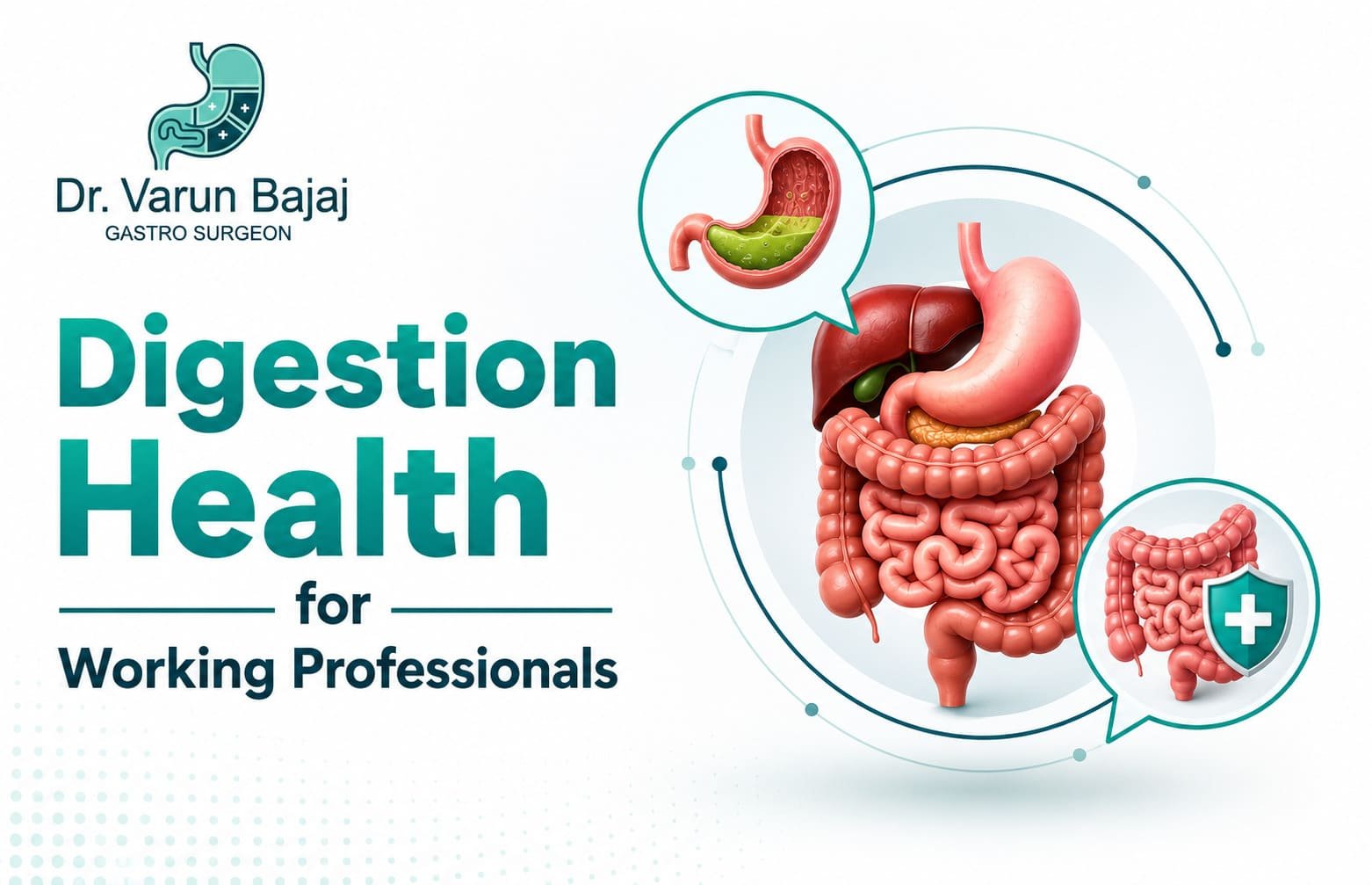
Digestion health refers to how efficiently your Digestive System breaks down food, absorbs nutrients, and removes waste without triggering pain, bloating, acidity, or irregular bowel habits. For working professionals, this process is under constant pressure. Rushed meals, long sitting hours, irregular schedules, and daily stress all interfere with normal gut function. The good news is that most desk-job digestion problems are caused by fixable habits, not serious disease, and they respond well to early correction.
This guide breaks down exactly why digestion suffers during a typical workday, what dietary and stress-related patterns are responsible, and which practical changes can restore gut comfort. It also explains the warning signs that mean it is time to consult a Stomach Doctor in Ahmedabad rather than wait it out.
Why Working Professionals Are More Prone to Digestion Problems
Office-based work changes how, when, and what people eat, and the gut notices every one of those changes. Long meetings push lunch back by hours, desk-bound posture slows gut motility, and screen-related stress keeps the nervous system in a state that is not conducive to digestion. Over months, these small disruptions add up to chronic, low-grade digestive discomfort.
Three factors make professionals especially vulnerable:
- Irregular meal timing, eating at inconsistent hours confuses the gut’s natural rhythm.
- A sedentary routine of sitting for 8–10 hours slows intestinal movement.
- Sustained mental stress, deadlines and multitasking keep cortisol elevated, which directly affects gut function.
Common Digestion Issues in Working Professionals
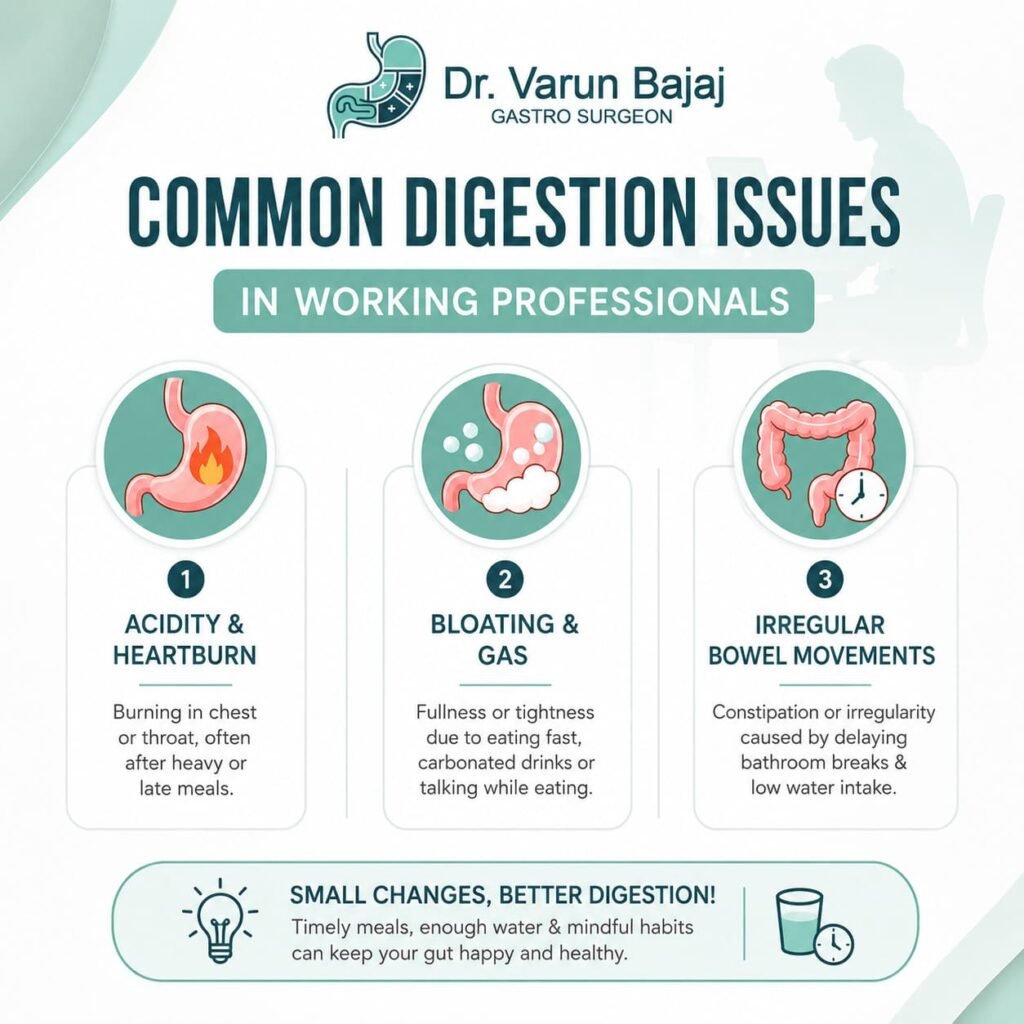
The most frequently reported digestion issues in working professionals are acidity, bloating, irregular bowel movements, and stomach pain after eating. These are not random. Each has a clear behavioural trigger that is easy to identify once you know what to look for.
Acidity and Heartburn
A burning sensation in the chest or throat after meals, especially after lunch eaten in a hurry or dinner eaten late at night. This happens when stomach acid moves backwards into the food pipe, often worsened by skipping breakfast and then overeating later.
Bloating and Gas
A feeling of fullness or tightness in the abdomen, frequently linked to talking while eating, eating too fast at the desk, or consuming carbonated drinks during work hours.
Irregular Bowel Movements
Constipation or alternating bowel patterns are extremely common in professionals who delay bathroom visits during back-to-back meetings or who drink too little water throughout the day.
Stomach pain after eating food is one of the most common complaints patients bring to a gastroenterologist. It can range from mild cramping to sharp discomfort and is usually linked to fast eating, high-fat meals, excess caffeine, or underlying acidity. If this pain is occasional and mild, dietary correction usually resolves it. If it’s frequent, severe, or accompanied by other symptoms, it needs medical evaluation; see the warning signs section below.
Dietary Patterns That Disrupt Gut Health
Dietary patterns that disrupt gut health are rarely about one “bad” meal; they’re about repeated daily choices that the gut never gets a chance to recover from.
- Skipping breakfast leaves the stomach producing acid with nothing to digest, increasing the risk of acidity later.
- Excess caffeine and carbonated drinks both relax the valve between the stomach and food pipe, making acid reflux more likely.
- Heavy, late-night dinners: eating a large meal close to bedtime slows digestion and disrupts sleep quality, which itself affects gut health.
- Processed and fast-food dependency on low-fibre, high-fat convenience food slows gut transit and disturbs the gut microbiome over time.
- Inadequate water intake: many professionals unintentionally under-hydrate during long work hours, which directly contributes to constipation.
How Stress Intensifies Digestion Problems
Stress intensifies digestion problems through a direct, measurable pathway called the gut-brain axis, the nervous system connection between the brain and the digestive tract. When the brain perceives stress, it slows down normal digestive activity and redirects energy elsewhere in the body.
The Gut-Brain Connection, Explained Simply
Your gut has its own extensive nervous system, often called the “second brain.” It communicates constantly with your actual brain. Under chronic work stress, this communication shifts the gut into a defensive state, slowing digestion, increasing acid production, and heightening sensitivity to discomfort, which is why stressful weeks often coincide with worse bloating or acidity.
Cortisol’s Role in Digestive Slowdown
Sustained stress keeps cortisol levels elevated. Elevated cortisol is linked to slower gut motility, increased acid secretion, and a less balanced gut microbiome. Together, these changes explain why stressful periods at work so often line up with flare-ups of stomach pain, bloating, or irregular bowel habits.
Enhancing Digestion Health Through Lifestyle
Enhancing digestion health through lifestyle doesn’t require an extreme diet overhaul. Small, sustainable changes produce the most lasting improvement.
- Eat at consistent times; even a 30-minute daily routine helps the gut anticipate and prepare for meals.
- Practising mindful eating, eating slowly and without screens, improves digestion and reduces overeating.
- Prioritise fibre and hydration: whole grains, vegetables, and 2.5–3 litres of water daily support regular bowel movements.
- Moving after meals, a short 10-minute walk after lunch or dinner, measurably improves digestion compared to sitting immediately.
- Protect sleep: poor sleep disrupts the gut microbiome, so 7–8 hours of consistent sleep supports gut recovery.
Healthy Work Habits for Better Digestion Health
Healthy work habits for better digestion health are about designing your workday so digestion isn’t an afterthought.
- Set a recurring calendar reminder for lunch so meetings don’t override it.
- Keep a water bottle at your desk and track intake through the day.
- Take a 5-minute standing or walking break every 60–90 minutes.
- Avoid eating at your desk while reading emails. Even 10 distraction-free minutes help.
- Limit caffeine to before 2 PM to protect both digestion and sleep.
- Don’t delay bathroom visits. Holding it in worsens constipation over time.
These habits sound small individually, but together they address most of the root causes covered earlier in this guide.
When Should You See a Gastroenterologist?
Most digestion issues in working professionals improve with the lifestyle changes above within a few weeks. However, certain signs need prompt medical attention rather than home management.
See a stomach doctor in Ahmedabad or your nearest gastroenterologist if you experience:
- Stomach pain after eating that is severe, frequent, or worsening
- Unintentional weight loss
- Blood in stool or black, tarry stools
- Persistent vomiting or difficulty swallowing
- Acidity or heartburn occurring more than twice a week despite dietary changes
- A noticeable, lasting change in bowel habits
These symptoms don’t always indicate something serious, but they warrant a proper evaluation rather than guesswork. Our guide to recognising serious stomach pain covers this in more detail.
How Dr Varun Bajaj Can Help
Dr Varun Bajaj is a practising Gastroenterologist in Ahmedabad, focused on diagnosing and treating digestive disorders ranging from everyday acidity and bloating to more complex gastrointestinal conditions. As a Dr Varun Bajaj Gastro Surgeon, his approach combines clinical evaluation with practical, lifestyle-based guidance, recognising that for most working professionals, sustainable digestive health comes from addressing daily habits alongside any necessary medical treatment
Frequently Asked Questions
What are the signs of poor digestion?
Common signs include bloating, excessive gas, acidity or heartburn, irregular bowel movements (constipation or loose stools), stomach pain or cramping after meals, frequent nausea, fatigue right after eating, bad breath, and noticing undigested food in stool. If several of these occur regularly rather than occasionally, it points to an underlying digestive pattern worth addressing.
Which fruit is best for digestion?
Papaya is widely considered one of the best fruits for digestion because it contains papain, a natural enzyme that helps break down protein and eases bloating. Bananas (rich in soluble fibre and potassium) and apples (high in pectin, which supports healthy bowel movements) are close runners-up.
What vegetables are good for digestion?
Leafy greens like spinach, along with beets, fennel, pumpkin, and sweet potato, are gentle on the gut and rich in fibre that supports regular bowel movements. Ginger, though technically a root, is also widely used to ease bloating and nausea.
What is the hardest food to digest?
Fried and high-fat foods are generally the hardest to digest because fat slows down stomach emptying. Red meat, heavily processed foods, very spicy dishes, and dairy (for those who are lactose intolerant) are also common culprits, often causing bloating, heaviness, or discomfort after eating.
How do I fix my gut health fast?
There’s no genuine overnight fix for gut health, but you can see noticeable improvement within a few days by staying well-hydrated, eating more fibre, cutting back on processed food and alcohol, eating slowly, and getting enough sleep. If symptoms are severe or persist beyond a couple of weeks, it’s best to see a gastroenterologist rather than rely on quick fixes.
How to improve digestion naturally at home?
Eat meals at consistent times, chew food slowly, stay hydrated, include fibre-rich foods and fermented foods like curd in your diet, and take a short walk after meals. Managing stress and getting adequate sleep also play a bigger role in digestion than most people realise.