Reviewed by Dr Varun Bajaj, Gastroenterologist & GI Surgeon, Ahmedabad
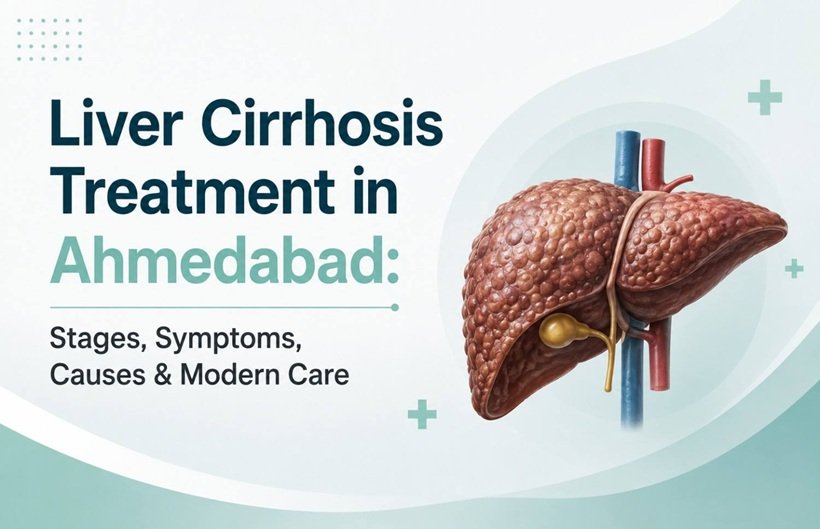
If you or a loved one has recently been told the words, “liver cirrhosis,” it’s natural to feel overwhelmed. The good news is that cirrhosis is no longer the hopeless diagnosis it once was. With early detection, the right medical guidance, and consistent care, many patients go on to live long, stable lives. For anyone searching for liver cirrhosis treatment in Ahmedabad, this guide breaks down what cirrhosis actually is, how it progresses, its symptoms, causes, and the treatment approaches used by liver specialists today.
At Dr. Varun Bajaj’s clinic in Ahmedabad, an experienced gastroenterologist and GI surgeon offers patients a structured evaluation of their liver health and a treatment plan built around the specific cause and stage of their disease, not a one-size-fits-all approach.
What Is Liver Cirrhosis?
Liver cirrhosis is a late stage of chronic liver disease in which long-term inflammation causes healthy liver tissue to be gradually replaced by scar tissue. Over time, this scarring, known as fibrosis, becomes extensive enough to block normal blood flow through the liver and interferes with its ability to filter toxins, process nutrients, and produce essential proteins.
The liver is a remarkably resilient organ with strong self-repair abilities, but once scarring reaches the cirrhosis stage, that regenerative capacity is significantly reduced. This is why cirrhosis is generally considered a permanent condition; however, that doesn’t mean it can’t be managed. Timely treatment can often slow, or in some cases halt, further progression, which is exactly why consulting an experienced liver specialist in Ahmedabad early makes such a meaningful difference in long-term outcomes.
Stages of Liver Cirrhosis
Cirrhosis doesn’t appear overnight; it develops gradually as scar tissue builds up. Broadly, doctors classify it into two functional stages:
- Compensated Cirrhosis: In this earlier stage, the liver still has enough healthy tissue to function reasonably well, and the body compensates for the damage. Many patients have no noticeable symptoms at this point, which is why routine health checkups matter.
- Decompensated Cirrhosis: As liver function declines further, the liver can no longer keep up, and visible symptoms and complications begin to appear, such as fluid buildup, jaundice, and confusion.
Doctors also use structured scoring systems, such as the Child-Pugh classification and MELD (Model for End-Stage Liver Disease) score, to grade severity more precisely, ranging from milder, well-compensated disease to advanced, decompensated cirrhosis. A non-invasive FibroScan liver test is often used alongside these scores to measure liver stiffness and track scarring without repeated biopsies. These assessments help determine the right treatment path, including whether a patient should be evaluated for a liver transplant. Getting graded correctly early on is one of the most important steps in planning effective liver cirrhosis treatment.
Symptoms of Liver Cirrhosis
Because the liver can compensate for damage in its early stages, symptoms often go unnoticed until the disease has progressed. This is one of the biggest challenges in catching cirrhosis early.
Early symptoms may include:
- Persistent fatigue and weakness
- Loss of appetite or nausea
- Mild discomfort in the upper abdomen
- Small spider-like blood vessels visible under the skin
- Redness on the palms
As the disease advances, symptoms can include:
- Jaundice (yellowing of the skin and eyes)
- Dark-colored urine and pale stools
- Persistent itching without a visible rash
- Unexplained weight and muscle loss
- Swelling in the abdomen (ascites) or legs
- Easy bruising or bleeding
- Confusion or difficulty concentrating (a sign of hepatic encephalopathy)
If you notice any combination of these signs, especially jaundice or abdominal swelling, it’s important to consult a gastroenterologist in Ahmedabad promptly rather than waiting for symptoms to worsen.
Causes of Liver Cirrhosis
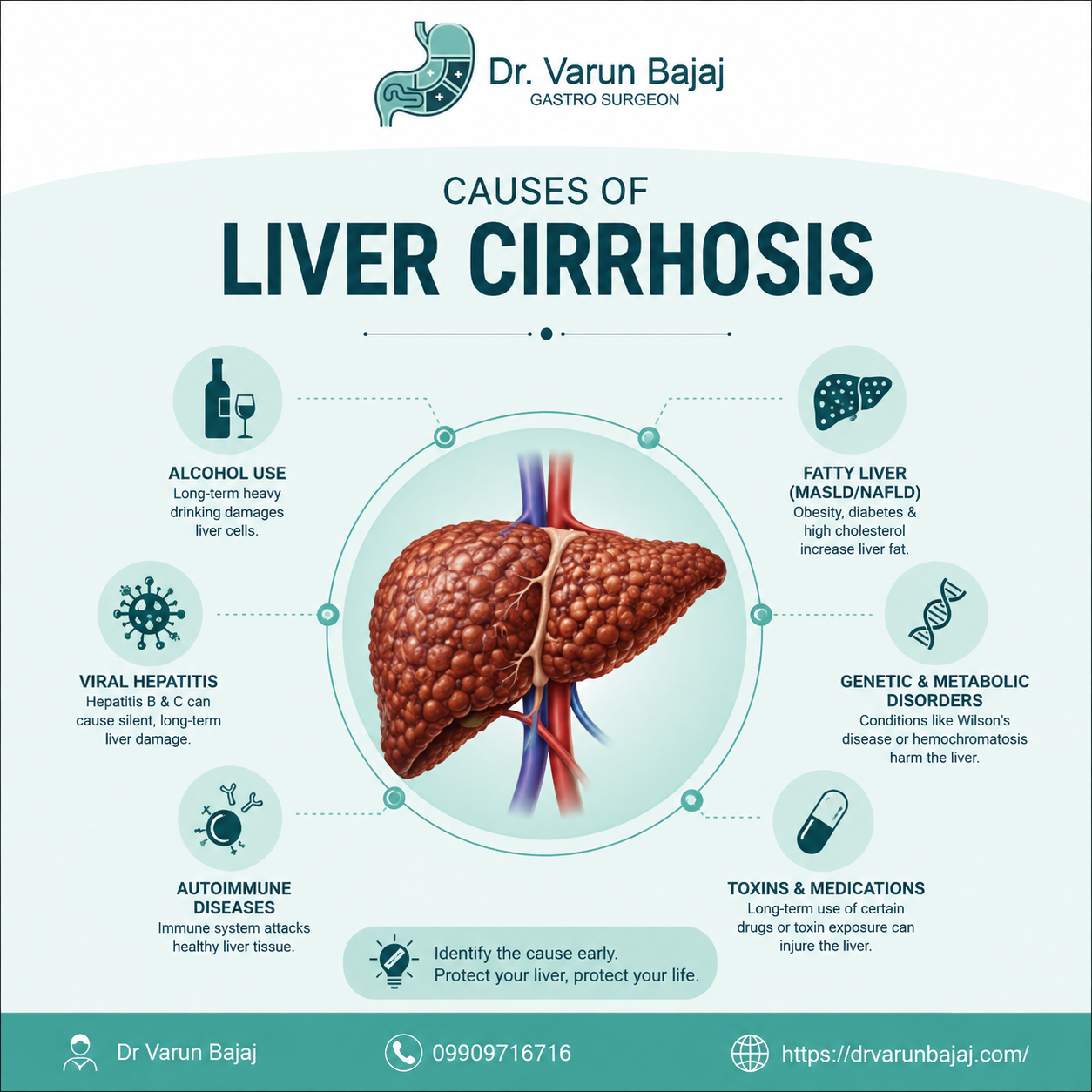
Cirrhosis is almost always the result of years of ongoing liver inflammation from an underlying condition. The most common causes include:
- Chronic alcohol use: long-term, heavy alcohol consumption remains one of the most well-known causes of cirrhosis.
- Metabolic dysfunction-associated fatty liver disease (MASLD/NAFLD): linked to obesity, high blood sugar, and high cholesterol, this is an increasingly common cause, even in people who don’t drink alcohol.
- Chronic viral hepatitis (Hepatitis B and C): long-standing viral infections that quietly damage the liver over years, often without early symptoms.
- Autoimmune liver diseases: conditions where the body’s immune system mistakenly attacks liver tissue.
- Genetic and metabolic disorders: such as Wilson’s disease or hemochromatosis, which cause harmful substances to accumulate in the liver.
- Chronic bile duct blockage or toxic exposure: including long-term use of certain medications or environmental toxins.
- Understanding the root cause matters enormously, because treatment strategies differ significantly depending on what’s damaging the liver.
Treatment of Liver Cirrhosis
While established scarring in cirrhosis can’t be fully reversed, modern hepatology has come a long way in helping patients manage the disease effectively and avoid complications. Treatment generally focuses on four pillars:
-
Treating the Underlying Cause
- Antiviral therapy for hepatitis B and C: hepatitis C is now curable in most patients, and hepatitis B can be effectively suppressed with long-term antivirals.
- Complete alcohol cessation for alcohol-related liver disease, sometimes supported by de-addiction programs.
- Managing metabolic factors: controlling blood sugar, cholesterol, and weight for fatty liver-related cirrhosis.
- Immunosuppressive therapy for autoimmune liver conditions, under close medical supervision.
-
Lifestyle and Nutritional Support
- Complete avoidance of alcohol, regardless of the original cause
- A balanced, protein-adequate diet. Contrary to popular belief, most cirrhosis patients don’t need to drastically restrict protein unless advised otherwise by their doctor. Patients managing viral hepatitis alongside cirrhosis may also find this healthy diet guide for hepatitis patients useful.
- Reduced salt intake to help control fluid retention
- Maintaining a healthy weight through supervised, gradual lifestyle changes
- Nutritional supplements where deficiencies are identified
-
Managing Complications
As cirrhosis progresses, doctors closely monitor for and treat complications such as:
- Ascites (fluid buildup): managed with diuretics, salt restriction, or paracentesis (fluid drainage) in more advanced cases
- Variceal bleeding: treated with endoscopic procedures to seal at-risk blood vessels
- Hepatic encephalopathy: managed with medications like lactulose to reduce toxin buildup
- Infections: treated promptly, as cirrhosis lowers immunity
-
Advanced Monitoring and Emerging Therapies
Liver care has advanced significantly in recent years. Non-invasive tools like liver elastography now allow doctors to assess liver stiffness and scarring without always needing a biopsy. Research into anti-fibrotic medications, drugs designed to target scarring itself, is ongoing, and personalized treatment plans built around regular imaging, blood testing, and periodic reassessment are now standard practice for effective long-term management.
-
Liver Transplantation
For patients with advanced, decompensated cirrhosis or liver failure who aren’t responding to other treatments, liver transplantation remains the most effective long-term solution. Advances in surgical technique and post-transplant care have considerably improved survival outcomes.
Why Choose Dr. Varun Bajaj for Liver Cirrhosis Treatment in Ahmedabad?
Dr. Varun Bajaj is a well-known gastro surgeon in Ahmedabad with over a decade of experience managing complex gastrointestinal and liver conditions. As a fellowship-trained specialist in GI surgery and liver disorders, he combines medical management with advanced surgical expertise, offering patients comprehensive, evidence-based care for liver disorders, from early-stage fatty liver disease to advanced cirrhosis requiring transplant evaluation.
If you’re experiencing symptoms of liver disease or have already been diagnosed with cirrhosis, don’t wait to seek expert care. Book a consultation with Dr. Varun Bajaj today for a thorough evaluation and a treatment plan tailored to your condition.
Frequently Asked Questions
Can people with cirrhosis live a normal life?
Yes, many people can. Patients with early, compensated cirrhosis often live active, fairly normal lives for years, especially when the underlying cause is controlled and they follow their doctor’s care plan closely. Life expectancy and quality of life depend heavily on the stage of disease, how well complications are managed, and how consistently the patient attends follow-up care.
What is the latest treatment for cirrhosis of the liver?
Recent advances include highly effective antiviral therapies for hepatitis B and C, non-invasive liver elastography for monitoring scarring without repeated biopsies, and ongoing research into anti-fibrotic medications that may help reduce scar tissue. Personalized treatment plans that combine imaging, blood tests, and lifestyle management are now the standard of modern liver care.
What are the 5 stages of cirrhosis?
Cirrhosis is broadly divided into compensated and decompensated stages, but doctors often use more detailed scoring systems, like Child-Pugh (Classes A, B, and C) and MELD scores, to grade severity on a finer scale. These systems assess how well the liver is functioning and whether complications like ascites or bleeding have developed, helping guide treatment decisions, including transplant eligibility.
What medications treat cirrhosis?
There’s no single medication that treats cirrhosis itself, since the treatment depends on the underlying cause. This may include antivirals for hepatitis B or C, corticosteroids or immunosuppressants for autoimmune liver disease, diuretics for fluid retention, and lactulose for hepatic encephalopathy. A liver specialist will determine the right combination based on your specific condition.
How to live longer with cirrhosis?
The most impactful steps are complete alcohol avoidance, following a balanced and liver-friendly diet, maintaining a healthy weight, taking prescribed medications consistently, and attending regular follow-up appointments so complications can be caught and treated early. Avoiding self-medication is also critical, since a damaged liver processes drugs differently.
What is the best treatment for liver cirrhosis?
There isn’t a single “best” treatment. The right approach depends on the stage of cirrhosis and its underlying cause. It typically combines treating the root cause, lifestyle changes, managing complications as they arise, and regular monitoring. For advanced, decompensated cirrhosis, liver transplantation may be the most effective option. Consulting an experienced liver specialist is the best first step toward the right treatment plan.