Reviewed by Dr Varun Bajaj, Gastroenterologist & GI Surgeon, Ahmedabad
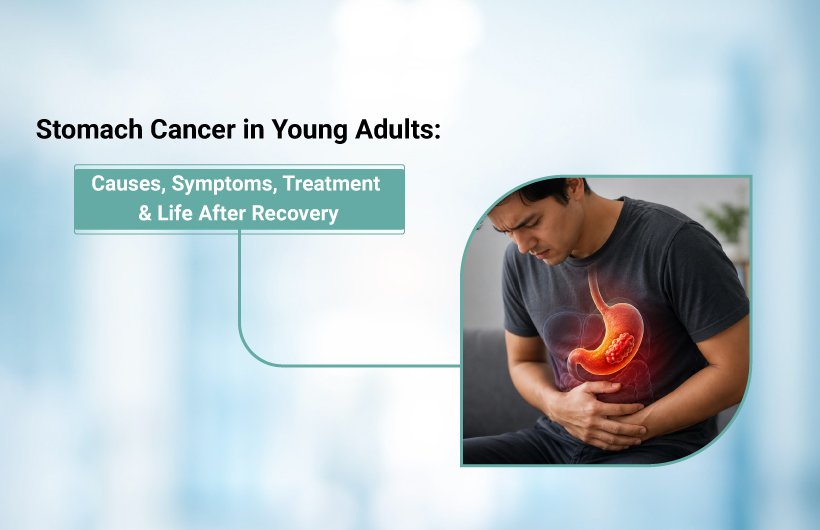
Stomach cancer has long been thought of as a disease of older adults, typically diagnosed after the age of 60. But that picture is changing. Over the past decade, doctors across India and the world have been seeing a steady rise in stomach cancer among people in their 20s and 30s, many of whom have no family history of the disease at all.
As a gastro surgeon in Ahmedabad who regularly evaluates patients with persistent digestive complaints, I’ve noticed this shift firsthand. Vague symptoms like ongoing indigestion, unexplained weight loss, or a nagging sense of fullness are too often dismissed as “just stress” or “acidity” in younger patients, delaying diagnosis at a stage when treatment could be most effective.
This guide covers why stomach cancer in young adults is increasing, the early warning signs to watch for, what causes it, how it’s treated, and what life looks like after recovery.
Why Is Stomach Cancer Increasing in Young Adults?
Globally, stomach (gastric) cancer rates in people under 50 have been climbing even as overall stomach cancer rates in older populations decline. Researchers point to a combination of factors rather than a single cause:
- Changing diets: a shift toward processed, packaged, and salt-preserved foods, and away from fresh fruits and vegetables
- Rising obesity rates: excess body weight is an established risk factor for cancers of the upper digestive tract
- Chronic H. pylori infection acquired in childhood: this bacterium can silently inflame the stomach lining for decades before cancer develops
- Increased alcohol consumption and smoking at younger ages
- Better awareness and endoscopy access, which means more cases are being picked up that might once have gone undiagnosed
- A possible genetic or hereditary component in a meaningful subset of young-onset cases, particularly when cancer is diagnosed before age 40
It’s rarely one factor alone. Most young patients have a combination of lifestyle exposure, delayed pylori treatment, and, in some cases, an underlying genetic susceptibility that a doctor can screen for.
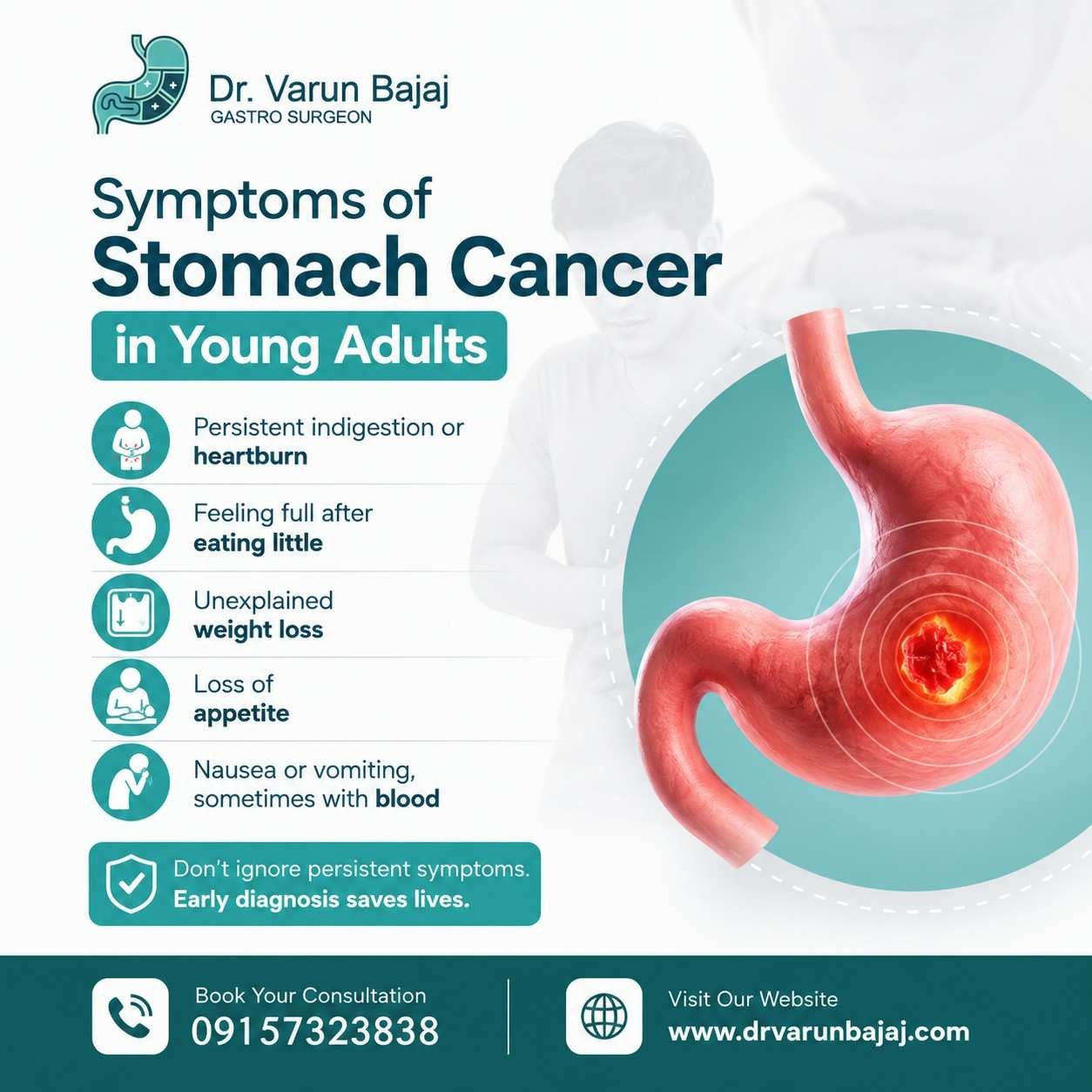
Symptoms of Stomach Cancer in Young Adults
The biggest challenge with stomach cancer in younger people is that early symptoms overlap almost completely with common, harmless digestive complaints. This is exactly why they get ignored or self-treated with over-the-counter antacids for months.
Symptoms worth paying attention to, especially if they persist beyond 2–3 weeks, include:
- Persistent indigestion or heartburn that doesn’t respond to usual antacids
- A feeling of fullness after eating only a small amount
- Unexplained weight loss
- Loss of appetite
- Nausea or vomiting, sometimes with blood
- Vague, dull pain or discomfort in the upper abdomen
- Fatigue or weakness, often from low-grade internal blood loss and anaemia
- Difficulty swallowing (more common when the cancer is near the top of the stomach)
- Dark or black-colored stools
None of these symptoms means you have stomach cancer. Most people with these complaints have far more common conditions like gastritis, acid reflux, or an ulcer. But if symptoms are persistent, worsening, or don’t fit your usual pattern, it’s worth getting evaluated with an endoscopy rather than waiting it out.
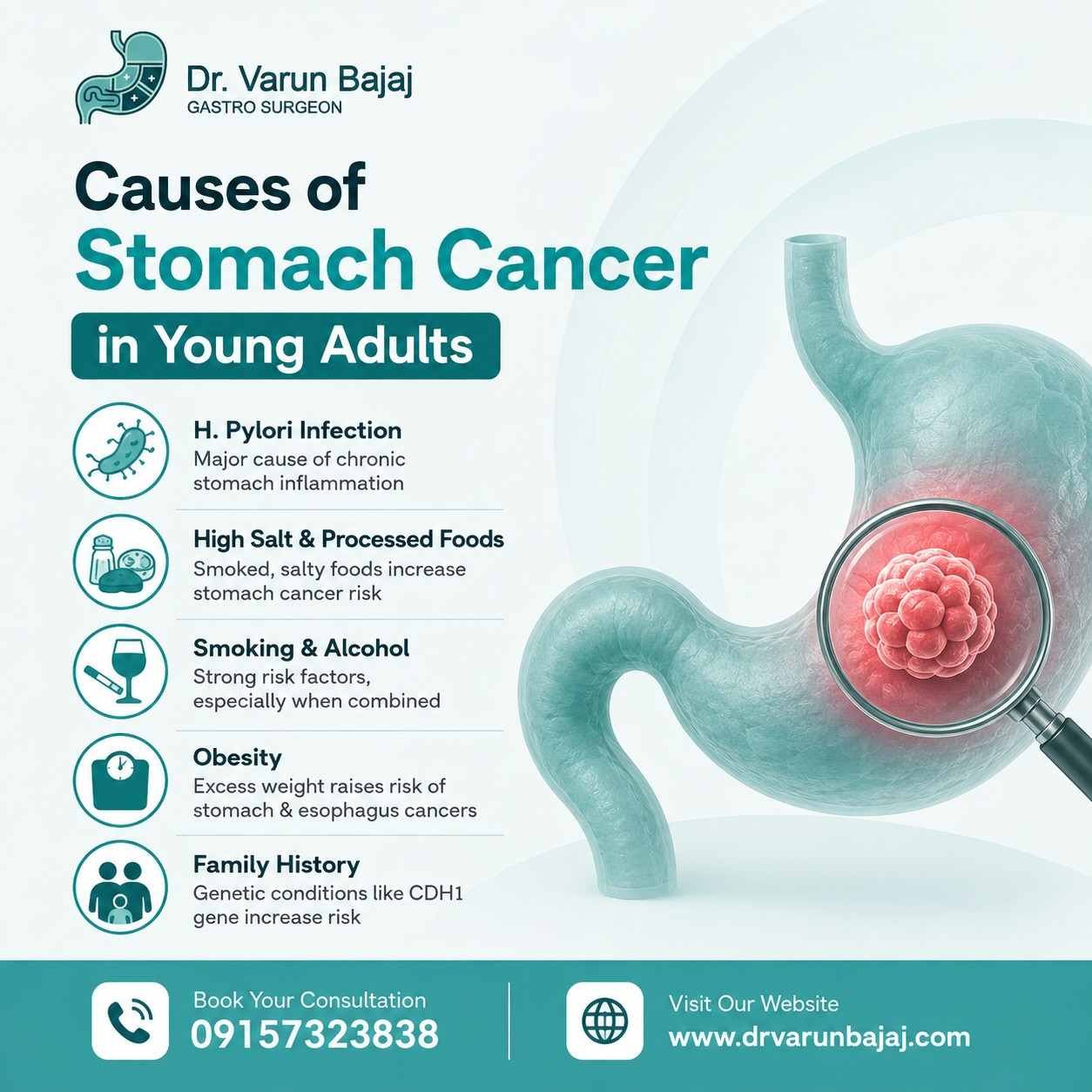
Causes of Stomach Cancer in Young Adults
Understanding the underlying causes helps in both prevention and early detection. The main contributors seen in younger patients include:
- Helicobacter pylori (H. pylori) infection This bacterium is the single most important known risk factor for stomach cancer worldwide. It’s usually acquired in childhood through contaminated food or water and can cause chronic gastritis that, over years, increases cancer risk if left untreated.
- Diet high in salt, smoked, and processed foods Salt-preserved and smoked foods, along with a diet low in fresh fruits and vegetables, are consistently linked to higher gastric cancer risk.
- Smoking and heavy alcohol use Both are independent risk factors, and the risk compounds when combined with H. pylori infection.
- Obesity Excess weight, particularly around the abdomen, is associated with a higher risk of cancers at the junction of the esophagus and stomach.
- Family history and hereditary syndromes A small but important subset of young-onset stomach cancers occur in families with hereditary diffuse gastric cancer (linked to the CDH1 gene) or other hereditary cancer syndromes. If a first-degree relative was diagnosed with stomach cancer at a young age, genetic counselling is worth discussing with your doctor.
How Is Stomach Cancer Diagnosed?
If symptoms are persistent, the standard evaluation typically includes:
- Upper GI endoscopy with biopsy: the gold standard for direct visualization and tissue diagnosis
- CT scan or PET-CT to check the extent of spread (staging)
- Endoscopic ultrasound (EUS) to assess how deep the tumor has grown into the stomach wall
- Blood tests, including tumor markers and a check for anemia
- H. pylori testing, since treating the infection is part of both prevention and, in some cases, early-stage management
Treatments for Stomach Cancer
Treatment is tailored to the stage of the disease, its location in the stomach, and the patient’s overall health. The main approaches include:
Endoscopic resection: For very early-stage cancers confined to the innermost layer of the stomach, the tumor can sometimes be removed directly through endoscopy, avoiding major surgery altogether.
Surgery: The primary curative treatment for most stages. This may involve removing part of the stomach (partial/subtotal gastrectomy) or the entire stomach (total gastrectomy), along with nearby lymph nodes. Minimally invasive laparoscopic surgery techniques are increasingly used, offering smaller incisions and faster recovery compared to open surgery.
Chemotherapy: Often given before surgery (neoadjuvant) to shrink the tumour, and/or after surgery (adjuvant) to reduce the risk of recurrence.
Radiation therapy: Used in combination with chemotherapy in select cases, particularly when the tumour involves nearby structures.
Targeted therapy and immunotherapy for advanced or metastatic disease Newer drugs targeting specific tumour markers (such as HER2) or the immune system have expanded treatment options significantly in recent years.
Because young patients often present with good overall fitness and organ function, they can generally tolerate combination treatment well, which is part of why early diagnosis makes such a meaningful difference to outcomes.
Life After Stomach Cancer
Recovery from stomach cancer, especially after gastrectomy, involves real adjustments, but most patients go on to live full, active lives. Key aspects of life after treatment include:
- Eating pattern changes: smaller, more frequent meals instead of three large ones, since the stomach’s capacity is reduced or, after total gastrectomy, absent
- Nutritional monitoring: regular checks for vitamin B12, iron, calcium, and vitamin D deficiencies, since the stomach plays a role in absorbing these nutrients; B12 injections are often needed long-term after total gastrectomy
- Dumping syndrome management: some patients experience symptoms like cramping, sweating, or diarrhea after eating, which usually improves with dietary adjustments over time
- Regular follow-up: periodic endoscopy, imaging, and blood work to monitor for recurrence, typically more frequent in the first 2 to 3 years
- Emotional and psychological support: a cancer diagnosis at a young age carries a different emotional weight, affecting career, family planning, and relationships; counselling and support groups can help significantly
- Physical recovery: gradual return to normal activity and exercise, with energy levels typically improving over several months
With the right follow-up care and nutritional support, many young patients return to work, exercise, and normal family life within months of completing treatment.
When Should You See a Doctor?
Don’t wait out persistent digestive symptoms. Book an evaluation if you notice:
- Indigestion or upper abdominal discomfort lasting more than 2–3 weeks despite antacids
- Unintentional weight loss
- Difficulty swallowing or a sensation of food sticking
- Vomiting blood or passing black, tarry stools
- A family history of stomach cancer, especially in a relative diagnosed young
As a stomach specialist in Ahmedabad, Dr Varun Bajaj offers timely endoscopic evaluation, accurate diagnosis, and complete surgical and non-surgical management for stomach conditions, from common digestive complaints to complex gastric cancer cases. Related digestive cancers, such as colorectal cancer, are also evaluated and managed at the clinic.
Concerned about persistent digestive symptoms?
Early evaluation makes the biggest difference in outcomes. Book an appointment with Dr Varun Bajaj, Gastroenterologist and Gastro Surgeon in Ahmedabad, for a thorough endoscopic evaluation and personalised care plan.
Frequently Asked Questions
Can stomach cancer make it difficult to eat?
Yes. As the tumor grows, it can cause early fullness, nausea, and loss of appetite, making it hard to eat normal amounts. If the cancer is near the top of the stomach or esophagus, swallowing difficulty can also occur. After treatment, especially gastrectomy, most patients need to shift to smaller, more frequent meals permanently.
What are the first warning signs of stomach cancer?
The earliest signs are often subtle and non-specific: persistent indigestion, a feeling of fullness after small meals, mild upper abdominal discomfort, and unexplained fatigue. Because these overlap with common conditions like acidity or gastritis, they’re frequently missed until symptoms progress. Persistent symptoms lasting beyond 2–3 weeks warrant an endoscopy.
What is the survival rate for stomach cancer?
Survival depends heavily on the stage at diagnosis. Cancer caught at an early, localized stage has a significantly better outlook than cancer diagnosed after it has spread to lymph nodes or other organs. This is precisely why early evaluation of persistent symptoms matters so much: outcomes improve substantially with earlier detection.
How to stop stomach cancer from spreading?
Once diagnosed, the priority is prompt, complete treatment: surgery, chemotherapy, radiation, or a combination, based on the stage. Delaying treatment allows more time for the cancer to spread to lymph nodes or distant organs. Regular follow-up after treatment also helps catch any recurrence early, when it’s most treatable.
When to worry about stomach cancer?
Isolated, mild indigestion is rarely a cause for alarm. Worry, and see a doctor, when symptoms are persistent (beyond 2 to 3 weeks), progressively worsening, accompanied by unexplained weight loss, vomiting blood, black stools, or when there’s a family history of stomach cancer at a young age.
What are the top 5 cancer-fighting foods?
While no single food prevents cancer, a diet consistently linked to lower gastric cancer risk includes fresh fruits and vegetables (especially citrus fruits and leafy greens), whole grains, foods rich in fiber, green tea, and foods with natural antioxidants like berries and tomatoes. Equally important is limiting salt-preserved, smoked, and heavily processed foods.
This article is for informational purposes only and is not a substitute for professional medical diagnosis or advice. Please consult a qualified gastroenterologist for evaluation of your specific symptoms.