If you have been quietly suffering from piles the itching, discomfort, or bleeding after a bowel movement you are not alone. Piles (medically known as hemorrhoids) affect a significant portion of the adult population, yet many people delay seeking help out of embarrassment or the hope that simple home remedies will make the problem disappear. While early symptoms may respond to lifestyle changes and home care, understanding the right Piles Treatment at the right time is essential to prevent the condition from worsening and achieve lasting relief.
The real question most patients ask is: Can I treat piles at home, or do I need to see a doctor?
The honest answer is that it depends. That answer could make a meaningful difference to your recovery. This guide explains when home remedies for piles are appropriate, when medical care becomes necessary, and what modern piles treatment options are available today.
Piles Treatment: Should You Choose Home Remedies or Medical Care?
If you have been quietly suffering from piles, the itching, the discomfort, or the bleeding after a bowel movement, you are not alone. Piles affect a significant portion of the adult population, yet many people delay seeking help of embarrassment or the hope that simple home remedies will make the problem disappear.
The real question most patients ask is: Can I treat piles at home, or do I need to see a doctor?
The honest answer is that it depends. That answer could make a meaningful difference to your recovery. This guide explains when home remedies for piles are appropriate, when medical care becomes necessary, and what modern piles treatment options are available today.
Understanding Piles: What Is Actually Happening in Your Body?
There are two main types:
- Internal piles Located inside the rectum. Usually painless but may bleed during bowel movements.
- External piles Located under the skin around the anus. These tend to cause more discomfort, itching, and swelling.
Piles are classified in four grades based on severity:
| Grade | Description |
| Grade 1 | Small swellings inside the anal canal. Not visible externally. |
| Grade 2 | Larger swellings that may temporarily prolapse (push out) during bowel movements but return on their own. |
| Grade 3 | Prolapse occurs and must be pushed back manually. |
| Grade 4 | Permanently prolapsed; cannot be pushed back. Requires medical treatment. |
Home Remedies for Piles: What Works and What Doesn’t
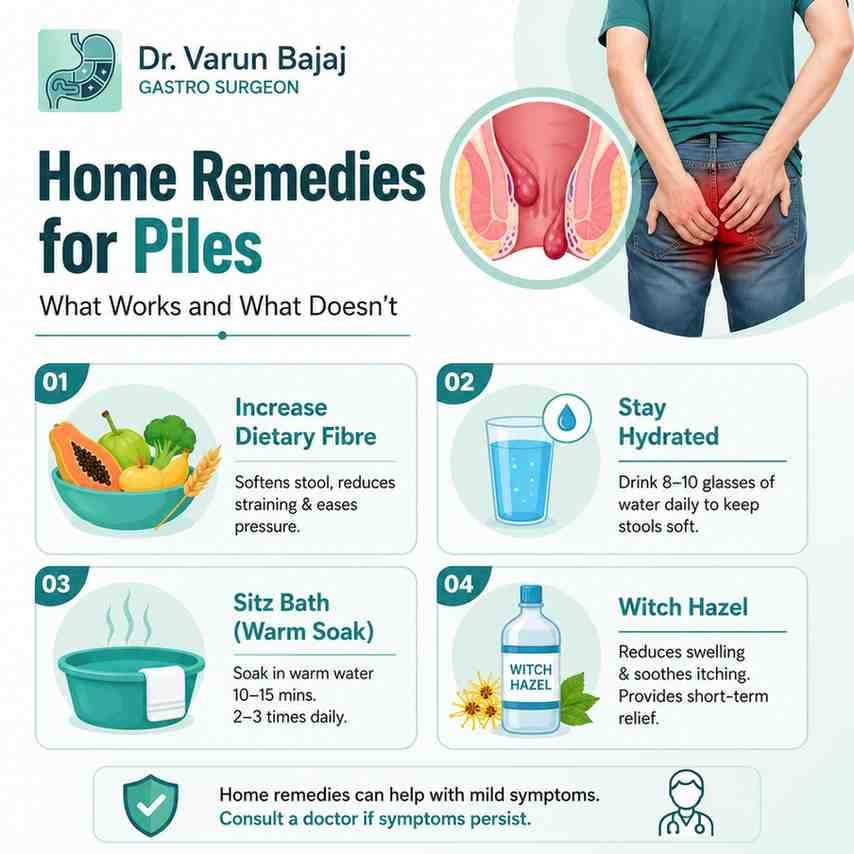
Increase Dietary Fibre Intake
Constipation and hard stools are among the top triggers for piles. Adding fibre to your diet softens stool, reduces straining, and eases pressure on anal veins.
Good fibre sources include:
- Fresh fruits papaya, guava, pear, banana
- Vegetables spinach, beans, broccoli, sweet potato
- Whole grains oats, brown rice, whole wheat bread
- Legumes lentils, chickpeas
Stay Hydrated Throughout the Day
Drinking at least 8–10 glasses of water daily keeps stools soft and reduces the need to strain. Herbal drinks like warm lemon water, coconut water, and buttermilk can also support bowel regularity.
Sitz Bath (Warm Water Soak)
A sitz bath involves sitting in a shallow tub of warm water for 10–15 minutes after bowel movements. It reduces swelling, soothes itching, and helps relax the anal muscles.
This is one of the most evidence-supported home measures for piles relief. Warm water not hot is the key. Do these two to three times daily during a flare-up.
Witch Hazel
Witch hazel is a natural astringent that temporarily reduces swelling and soothes irritation around the anal area. It is available as a cream, liquid, or medicated wipe. It does not cure piles but can provide meaningful short-term relief from itching and discomfort.
When Home Remedies Are Not Enough: Signs You Need Medical Care for Piles
Home management has real limitations. If you have been trying home remedies for two to four weeks and symptoms persist or if any of the following apply it is time to consult a specialist.
Seek medical care if you notice:
- Rectal bleeding: Even small amounts of bright red blood should be evaluated. While piles are a common cause, bleeding can sometimes indicate a more serious condition.
- Severe pain, particularly if a lump has appeared outside the anus that cannot be pushed back.
- Prolapse that does not reduce Grade 3 or 4 piles require medical or surgical management.
- Symptoms lasting more than 4 weeks. Persistent symptoms signal that the condition will not resolve on its own.
- Anaemia: Chronic low-grade bleeding from piles can lead to iron-deficiency anaemia over time.
- Sudden worsening: A sudden increase in pain or swelling could indicate a complication like thrombosis (blood clot within the pile).
Home Remedies vs Medical Care: A Clear Comparison
| Factor | Home Remedies | Medical Care |
| Best for | Grade 1 and mild Grade 2 | Grade 2, 3, and Grade 4 |
| Treats root cause | Rarely | Yes |
| Time to relief | Weeks | Days to 2 weeks |
| Risk of recurrence | Higher | Lower (especially with surgery) |
| Side effects | Minimal | Depends on procedure |
| Cost | Low | Moderate to higher |
| Recommended duration | 2–4 weeks trial | As directed by specialist |
Can Piles Be Cured Completely Without Surgery?
Yes, for Grade 1 and early Grade 2 piles, a complete cure is achievable without surgery through a combination of dietary changes, lifestyle modification, and in-clinic procedures like rubber band ligation or sclerotherapy.
For Grade 3 and Grade 4 piles, however, non-surgical measures provide temporary relief but rarely result in a permanent cure. In these cases, surgical or laser intervention offers the best long-term outcome with a low recurrence rate.
About Dr Varun Bajaj Gastroenterologist in Ahmedabad
Dr Varun Bajaj is a highly experienced gastroenterologist and piles surgeon based in Ahmedabad, specialising in the diagnosis and advanced treatment of gastrointestinal conditions including haemorrhoids, fissures and fistulas
With expertise in minimally invasive procedures including laser hemorrhoid treatment, Dr Varun Bajaj provides patients with individualised care plans that range from conservative management to advanced surgical interventions, always tailored to the patient’s condition and quality of life.
Final Thoughts: Don’t Let Piles Hold You Back
Piles are among the most treatable conditions in gastroenterology. Whether your situation calls for simple dietary adjustments or a minimally invasive laser procedure, effective solutions exist for every grade.
The key is not to wait. Early piles treatment whether through improved lifestyle habits or timely medical intervention prevents the condition from progressing and improves your quality of life far more quickly than hoping the problem resolves on its own.
If you are based in Ahmedabad and looking for expert guidance, Dr Varun Bajaj offers comprehensive evaluation and personalised treatment for piles at every stage. Book a consultation today and take the first step toward lasting relief.
FAQ’S
What are the best tablets for piles?
The best tablets for Piles Treatment depend on your symptoms and overall health. Doctors may prescribe pain relievers, stool softeners, or medications to reduce swelling. Always consult a Piles Surgeon before taking any medicine for safe and effective treatment.
Which treatment is best for piles, homeopathy, allopathy, or ayurvedic?
The right Piles Treatment depends on the severity of your condition. Mild cases may improve with lifestyle changes, while advanced piles often require evidence-based medical care. Consult a qualified Gastroenterologist in Ahmedabad to determine the most appropriate treatment option.
Can piles be cured completely without surgery?
Yes, early-stage piles can often be managed without surgery through a high-fibre diet, adequate hydration, medications, and minimally invasive procedures. However, advanced piles may require surgical treatment for long-term relief and to reduce the risk of recurrence.
Can sitting too long cause piles?
Prolonged sitting, especially with a sedentary lifestyle, can increase pressure on the veins around the rectum and contribute to piles. Taking regular breaks, staying physically active, and maintaining healthy bowel habits can help lower the risk.
What drinks help piles go away?
Drinking plenty of water is essential for healthy bowel movements and effective Piles Treatment. Coconut water, buttermilk, and fresh fruit juices without added sugar may support hydration, while limiting alcohol and excessive caffeine can help prevent constipation and irritation.