That sharp pain in your lower right abdomen is it trapped gas, or could it be your appendix?
It is a question more people ask than you might think. Appendix and Gas pain can feel remarkably similar in the early stages, and mistaking one for the other is not just common it can sometimes be dangerous. Gas pain is usually harmless and often resolves on its own, but appendicitis can quickly become a serious medical emergency if left untreated.
In many cases, people ignore the symptoms and delay getting help from an appendix surgeon, assuming it is only temporary digestive discomfort. However, appendicitis can worsen rapidly and may become life-threatening within 24 to 72 hours if proper treatment is not given.
What Is Appendix Pain?
Appendix pain is discomfort caused by inflammation of the appendix, a small, finger-shaped pouch attached to the large intestine in the lower right abdomen. When the appendix becomes blocked and infected, it swells and causes a condition called appendicitis.
Appendicitis is one of the most common surgical emergencies worldwide. It can affect anyone but is most frequently seen in individuals between the ages of 10 and 30. Without timely treatment, the inflamed appendix can rupture, spilling infection into the abdominal cavity and causing a life-threatening complication called peritonitis.
Where Is the Appendix Located?
The appendix sits in the lower right quadrant of the abdomen. However, the exact position can vary, particularly in women during pregnancy and in some individuals where it sits slightly higher or lower than usual.
- In males, the appendix is typically fixed in the lower right abdomen, making localised pain more predictable.
- In females, the proximity of the appendix to the ovaries and fallopian tubes can make diagnosis more complex, as the pain may overlap with gynaecological conditions.
What Is Gas Pain?
Gas pain occurs when air or gas becomes trapped in the digestive tract, causing pressure, bloating, and cramping. It is extremely common and is almost always harmless.
Gas builds up in the intestines through swallowed air during eating or drinking, or as a byproduct of bacterial fermentation of undigested food in the colon. Certain foods—beans, cabbage, carbonated drinks, and dairy products—are well-known triggers.
Gas pain can occur anywhere in the abdomen and often moves around. It typically resolves within minutes to a few hours once the gas passes.
Symptoms of Appendicitis vs. Gas Pain
Symptoms of Appendicitis
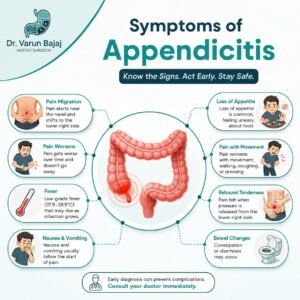
- Pain that starts around the navel and gradually shifts to the lower right abdomen. This migration pattern is a hallmark sign.
- Pain that worsens steadily over hours. It does not come and go like gas cramps.
- Fever, usually low-grade at first (37.5–38.5°C), rising as infection progresses.
- Nausea and vomiting often follow the onset of pain.
- Loss of appetite. Even the thought of food feels uncomfortable.
- Pain that worsens with movement. Walking, coughing, or pressing on the area increases discomfort.
- Rebound tenderness. Pain felt when pressure is released from the lower right abdomen (a sign doctors specifically test for).
- Constipation or diarrhoea. Bowel habits may change
Symptoms of Gas Pain
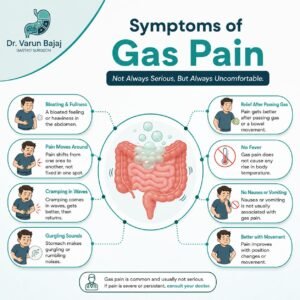
- Bloating and a feeling of fullness in the abdomen.
- Pain that moves around. It does not stay fixed in one location.
- Cramping that comes and goes in waves, then eases.
- Audible gurgling or rumbling sounds from the stomach.
- Relief after passing gas or having a bowel movement.
- No fever. Gas pain does not cause a temperature rise.
- No nausea or vomiting in most cases.
- Pain that responds to position changes. Moving around often helps.
Key Differences Between Appendix Pain and Gas Pain
|
Feature |
Appendix Pain |
Gas Pain |
|
Location |
Fixed, lower right abdomen | Moves around the abdomen |
|
Pain pattern |
Steady, progressively worsens | Comes and goes in waves |
|
Fever |
Yes, develops over time |
No |
|
Nausea/Vomiting |
Common | Rare |
| Relief with passing gas | No relief |
Yes, significant relief |
|
Movement makes it worse |
Yes | No, movement may help |
|
Loss of appetite |
Yes |
No |
| Duration | Hours to days, worsening |
Usually resolves within hours |
| Urgency | Medical emergency |
Self-limiting, not urgent |
Appendix Pain in Males vs. Females: Is There a Difference?
The underlying condition is the same, but there are some practical differences in how appendicitis presents and is diagnosed across sexes.
Appendix pain in males tends to present more straightforwardly. The localised lower-right pain pattern is usually clearer, with fewer overlapping conditions to consider.
Appendix pain in females can be more complex to diagnose. The pain may be confused with ovarian cysts, ectopic pregnancy, endometriosis, or pelvic inflammatory disease, all of which can produce similar symptoms in the lower right or lower abdomen. This is why women with lower abdominal pain, especially of reproductive age, often require more thorough evaluation before a diagnosis is confirmed.
About Dr Varun Bajaj – Gastroenterologist in Ahmedabad
Dr Varun Bajaj is a specialist gastroenterologist based in Ahmedabad, with extensive experience in diagnosing and treating conditions of the digestive tract, including appendicitis, piles, fissures, and fistulas.
Frequently Asked Questions
Does appendix pain feel like gas pain?
Yes, especially in the early stages. Both cause lower abdominal cramping. The key difference: appendix pain migrates to the lower right and worsens steadily over hours, while gas pain moves around, eases after passing gas, and does not cause fever or nausea.
How do I know if my pain is just gas?
Gas pain typically moves around, comes in waves, and relieves after passing gas or having a bowel movement. If pain is fixed in the lower right abdomen, worsens over hours, and comes with fever or nausea, it is not just gas. See a doctor promptly.
What age is most common for appendicitis?
Appendicitis most commonly occurs between ages 10 and 30, with peak incidence in teenagers and young adults. However, it can develop at any age, including in children and older adults, where it may present with less typical symptoms and is harder to diagnose.
Can appendix pain come and go for days?
Typical appendicitis pain worsens progressively rather than coming and going. However, chronic or recurrent appendicitis can cause intermittent right-sided pain over days or weeks. Recurring lower right abdominal pain across multiple days always warrants a medical evaluation.
What not to eat with appendicitis?
If appendicitis is suspected, avoid eating or drinking until assessed, as surgery may be needed urgently. During recovery, avoid fried foods, spicy foods, gas-producing vegetables, and carbonated drinks. Start with clear liquids and soft foods, then gradually reintroduce a normal diet as advised by your doctor.
Ready to Get Clarity on Your Abdominal Pain?
Do not guess when it comes to your health. Dr Varun Bajaj provides accurate diagnosis and personalised treatment for appendix-related conditions and all digestive health concerns.
Conclusion
Appendix pain and gas pain may start similarly, but they follow very different paths. Gas resolves on its own, while appendicitis does not. If your abdominal pain is fixed in the lower right, worsening over hours, and paired with fever or nausea, do not wait. The difference between the two is not always obvious, but catching appendicitis early can prevent a serious emergency.
Early evaluation means faster relief and safer outcomes.