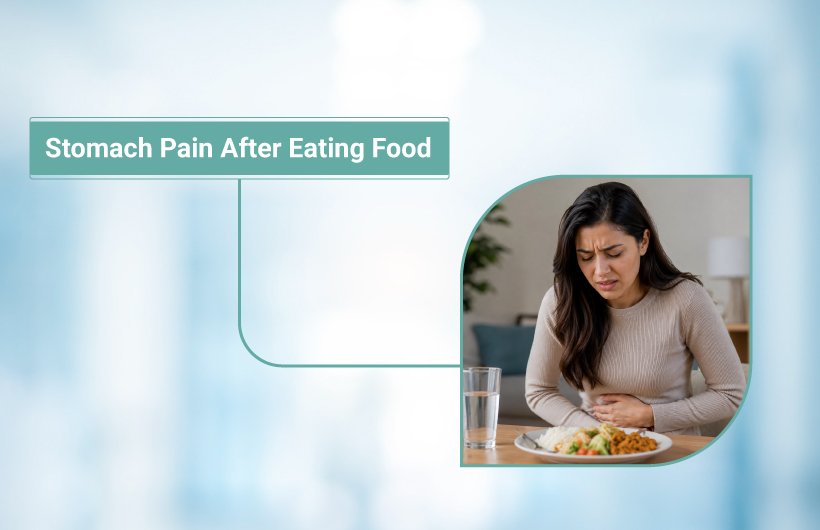
Do you get stomach pain after eating food? You’re not alone. A lot of people feel discomfort, bloating, or pain right after a meal. Sometimes it’s nothing serious. But if it keeps happening, your body may be trying to tell you something.
This guide explains the most common reasons for stomach pain after eating, what the location of your pain could mean, and when it’s time to see a gastroenterologist.
Why Does Your Stomach Hurt After Eating?
Your stomach and digestive system do a lot of work after every meal. When something is off, whether it’s what you ate, how you ate, or an underlying condition, you can feel pain or discomfort in your abdomen.
The pain can show up in different ways:
- A dull ache or heaviness
- Sharp or cramp-like pain
- A burning feeling in your chest or upper belly
- Bloating and gas
Where the pain is located and how long it lasts are two of the biggest clues about what’s causing it.
Common Causes of Stomach Pain After Eating Food
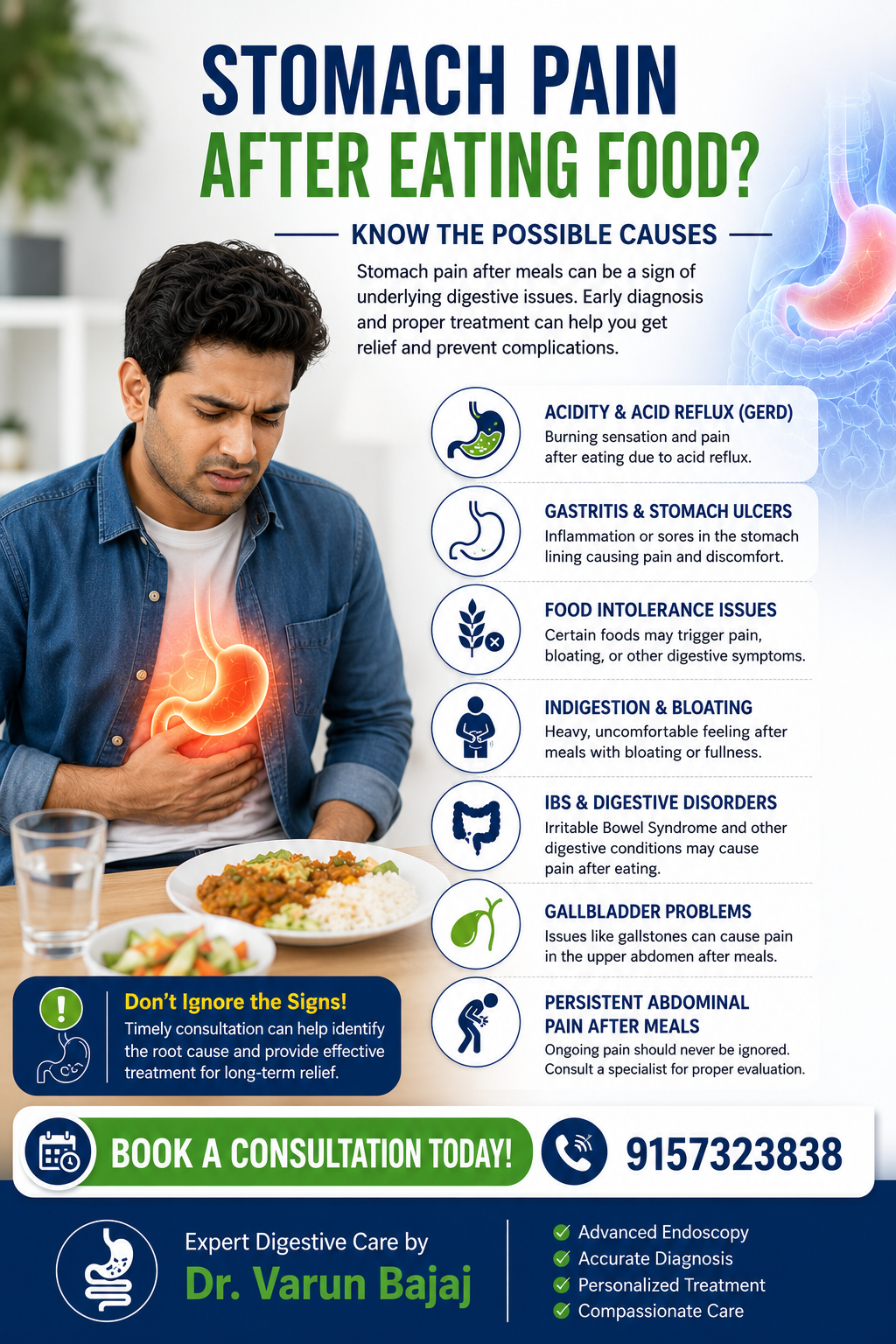
1) Indigestion (Dyspepsia)
This is the most common cause. Indigestion happens when you eat too much, eat too fast, or eat food that’s too spicy or oily.
You’ll usually feel:
- Fullness or heaviness in the upper belly
- A burning sensation
- Nausea
- Bloating or burping
The pain usually goes away on its own in an hour or two. But if it happens after most meals, it needs attention.
2) Acid Reflux (GERD)
Acid reflux happens when stomach acid flows back up into your food pipe (oesophagus). It often causes a burning pain in your chest or upper abdomen, especially after eating spicy, fatty, or acidic food.
Common signs:
- Heartburn (burning in the chest)
- Sour or bitter taste in the mouth
- Feeling of food coming back up
- Discomfort when lying down after eating
If this happens more than twice a week, it’s called GERD (Gastroesophageal Reflux Disease) and needs treatment.
3) Gastritis
Gastritis means your stomach lining is inflamed or irritated. It can be caused by an H. pylori bacterial infection, regular use of painkillers (like ibuprofen), or too much alcohol.
You may feel:
- A gnawing or burning pain in the upper abdomen
- Nausea
- Loss of appetite
- Feeling full quickly during a meal
4) Peptic Ulcers
Peptic ulcers are small sores that form on the inner lining of your stomach or small intestine. They’re often caused by H. pylori bacteria or long-term use of anti-inflammatory medicines.
The pain from ulcers is usually a burning or gnawing feeling in the upper abdomen. It can get worse on an empty stomach and sometimes improves briefly after eating, then returns.
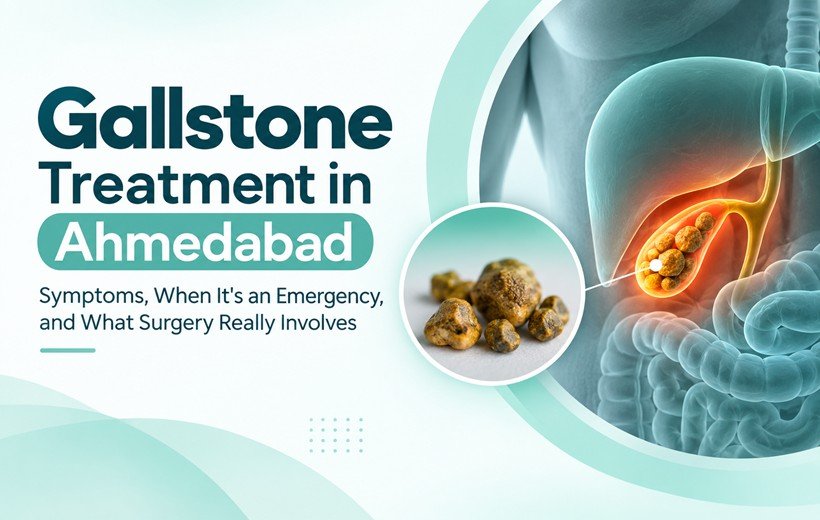
5) Gallstones or Gallbladder Disease
Your gallbladder stores bile, which helps digest fat. If gallstones are present, eating a fatty meal can trigger sharp pain in the upper right part of your abdomen.
Signs to watch for:
- Sudden, sharp pain after a fatty meal
- Pain in the upper right belly or centre of the abdomen
- Nausea or vomiting
- Pain that lasts 30 minutes to a few hours
A doctor should always check this type of abdominal pain after eating fatty food.
6) Irritable Bowel Syndrome (IBS)
IBS is a condition that affects the large intestine. It doesn’t damage the gut, but it causes real discomfort, especially after eating.
Symptoms include:
- Cramping or lower abdominal pain after meals
- Bloating and gas
- Diarrhoea, constipation, or alternating between both
- Relief after passing stools
Certain foods like dairy, gluten, caffeine, and high-fat meals are common triggers.
7) Food Intolerance or Sensitivity
Some people can’t digest certain foods properly. The most common ones are lactose (found in dairy) and gluten (found in wheat).
If you notice that your stomach ache after meals happens every time you eat a specific food, an intolerance could be the reason.
Symptoms usually include:
- Bloating and gas
- Stomach cramps
- Loose stools or diarrhoea
- Nausea
A doctor can help identify your trigger foods through simple tests.
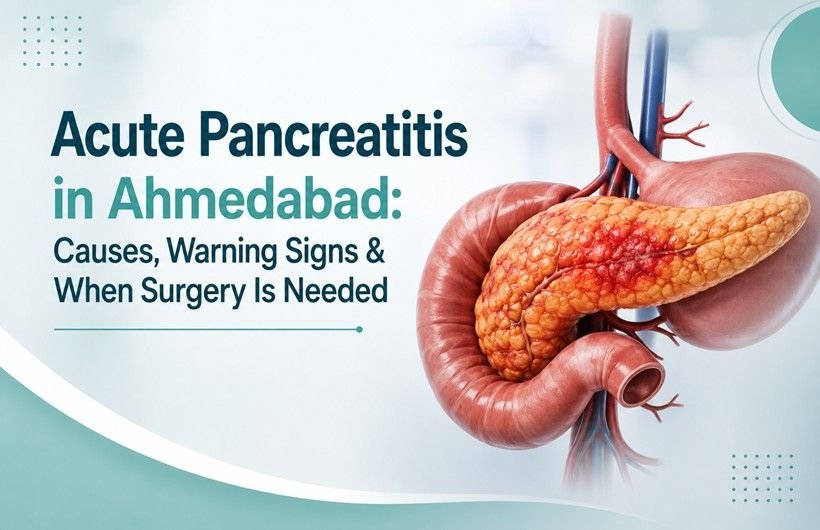
8) Pancreatitis
Pancreatitis means inflammation of the pancreas. It can cause upper abdominal pain that starts after eating and often radiates towards the back. This is a more serious condition that needs urgent medical evaluation.
Symptoms include:
- Severe upper abdominal pain after eating
- Pain that spreads to the back
- Nausea and vomiting
- Fever
Do not ignore this. See a doctor immediately if you have these symptoms.
Upper Abdominal Pain After Eating vs. Lower Abdominal Pain — What’s the Difference?
The location of your stomach pain is a helpful clue. Here’s a simple breakdown:
| Location | Possible Causes |
| Upper centre or upper left abdomen | Indigestion, acid reflux, gastritis, peptic ulcer |
| Upper right abdomen | Gallstones, gallbladder disease, liver issues |
| Upper abdomen radiating to back | Pancreatitis (urgent — see a doctor) |
| Lower left abdomen | IBS, diverticulitis, constipation |
| Lower abdomen (general) | IBS, food intolerance, constipation, gas |
This is a general guide. Only a proper examination by a gastroenterologist can confirm the actual cause of your abdominal pain after eating.
Warning Signs – When Stomach Pain After Meals Needs Immediate Attention
Mild stomach pain after eating is usually not serious. But some symptoms should never be ignored. See a doctor urgently if you have:
- Blood in your stools or vomit — stools that look black, tarry, or contain red blood
- Severe or worsening pain that doesn’t go away
- Unexplained weight loss — losing weight without trying
- Difficulty swallowing food or liquids
- Persistent vomiting
- Yellowing of the skin or eyes (jaundice)
- Fever along with abdominal pain
- Pain that wakes you up at night
These are red flag symptoms. They can point to a serious underlying condition that needs prompt diagnosis.
How Is Stomach Pain After Eating Diagnosed?
When you visit a gastroenterologist, they’ll start with a detailed conversation about your symptoms, what the pain feels like, when it starts, how long it lasts, and what makes it better or worse.
Depending on your symptoms, they may recommend:
- Blood tests — to check for infection, anaemia, or organ function
- Ultrasound — to look at the gallbladder, liver, and pancreas
- Endoscopy — a thin, flexible camera passed through the mouth to see the stomach lining
- CT scan — for a more detailed internal view when needed
- Stool tests — to check for H. pylori infection or internal bleeding
The right test depends on your specific symptoms. Your doctor will guide you on what’s needed.
What You Can Do at Home
For mild and occasional stomach pain after eating, a few simple changes can help:
- Eat smaller meals — large meals put more pressure on your digestive system
- Eat slowly — rushing through meals leads to swallowed air and indigestion
- Avoid trigger foods — spicy, oily, or very acidic foods are common culprits
- Don’t lie down immediately after eating — wait at least 2 hours before lying down or sleeping
- Stay hydrated — drink enough water throughout the day
- Reduce stress — stress directly affects digestion and can worsen symptoms
Important: These tips are for mild, occasional discomfort only. If your stomach ache after meals is frequent, severe, or comes with other symptoms, home care is not enough. You need a proper diagnosis.
When Should You See a Gastroenterologist in Ahmedabad?
You should book an appointment if:
- Your stomach pain after eating happens regularly (more than once or twice a week)
- The pain is getting worse over time
- You’ve tried dietary changes and nothing is improving
- You have any of the red flag symptoms listed above
- You’re losing weight without a reason
Dr. Varun Bajaj is a Gastrointestinal and Liver Specialist in Ahmedabad. He diagnoses and treats the full range of digestive conditions — from acid reflux and gastritis to gallbladder disease and complex GI disorders, with a patient-first approach.
If you’re dealing with persistent stomach pain after eating food, don’t wait for it to get worse.
👉 Book a consultation with Dr. Varun Bajaj
FAQs
Is it normal to have stomach pain after every meal?
No. Occasional mild discomfort can happen, but pain after every meal is not normal and should be evaluated by a doctor.
What causes stomach pain immediately after eating?
Immediate pain is often linked to indigestion, acid reflux, gastritis, or food intolerance. If it’s severe, it could indicate an ulcer or gallbladder issue.
When should stomach pain after eating be treated as an emergency?
If you have severe pain, black or bloody stools, vomiting blood, high fever, or jaundice — go to a doctor or emergency immediately.
Can stress cause stomach pain after meals?
Yes. Stress increases acid production and affects how your gut moves. It can trigger or worsen indigestion, IBS, and acid reflux.