Appendicitis is a common medical emergency that occurs when the appendix becomes inflamed or infected. It usually starts with mild abdominal discomfort but can quickly progress into a serious condition if left untreated. Understanding the 4 stages of appendicitis is important because early diagnosis and treatment can prevent complications such as rupture, severe infection, and emergency surgery.
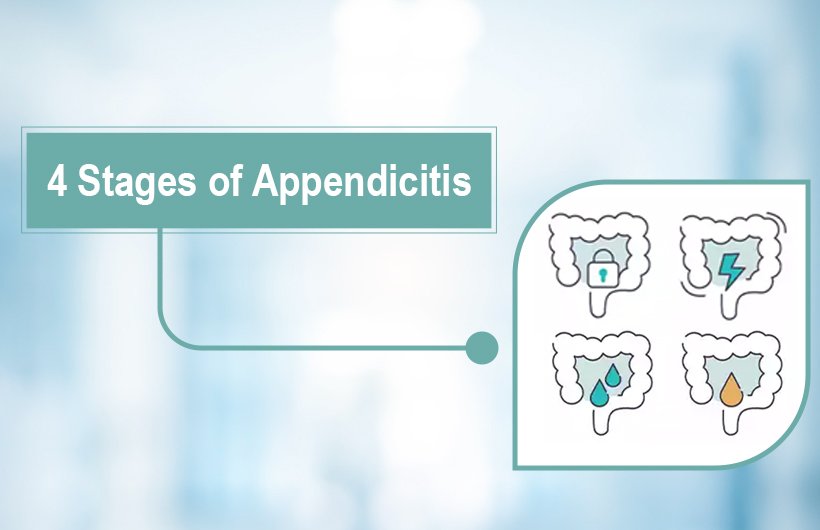
The 4 stages of appendicitis include:
- Early appendicitis
- Acute appendicitis
- Gangrenous appendicitis
- Ruptured appendix (perforation)
Each stage has different symptoms and severity levels. Recognising these warning signs early can help patients seek timely medical care and avoid life-threatening complications.
What Is Appendicitis?
Appendicitis is the inflammation of the appendix, a small finger-shaped pouch attached to the large intestine. It commonly develops due to blockage, infection, swelling, or trapped stool inside the appendix.
When the appendix becomes blocked, bacteria multiply inside it, causing swelling, pain, and pus formation. Without treatment, the infection can worsen rapidly and may eventually cause the appendix to burst.
Appendicitis can affect people of all age groups but is most common in teenagers and young adults.
What Are the 4 Stages of Appendicitis?
The 4 stages of appendicitis describe how the condition progresses from mild inflammation to a dangerous abdominal emergency.
1) Early Appendicitis (Initial Inflammation)
This is the first stage of appendicitis, where the appendix becomes irritated and inflamed.
Common Symptoms
- Mild pain around the belly button
- Loss of appetite
- Mild nausea
- Slight fever
- Feeling bloated or uncomfortable
At this stage, symptoms are often mistaken for gas, acidity, or indigestion. However, this is the best time to seek medical attention because treatment at an early stage may help prevent complications.
Many patients ignore these early signs, which allows the infection to progress further.
2) Acute Appendicitis (Severe Infection)
Acute appendicitis develops as the inflammation and infection become more severe.
The pain usually shifts from the centre of the abdomen to the lower right side, which is one of the most important signs of appendicitis.
Common Symptoms
- Sharp pain in the lower right abdomen
- Increased pain while walking or coughing
- Fever and chills
- Nausea and vomiting
- Abdominal tenderness
- Loss of appetite
This is the stage where appendicitis is most commonly diagnosed. Surgery to remove the appendix (appendectomy) is usually recommended to prevent rupture.
According to Dr Varun Bajaj, many patients seek medical help only after the pain becomes severe, which increases the risk of complications.
3) Gangrenous Appendicitis (Tissue Damage)
In this stage, blood supply to the appendix decreases, causing tissue death (gangrene).
This is considered a dangerous stage because the damaged appendix can rupture at any time.
Common Symptoms
- Severe and constant abdominal pain
- High fever
- Weakness and fatigue
- Increased infection symptoms
- Rapid heartbeat
- Extreme abdominal tenderness
Gangrenous appendicitis requires immediate medical treatment and surgery because delayed treatment can lead to widespread infection inside the abdomen.
4) Ruptured Appendix (Perforated Appendicitis)
This is the most serious stage of appendicitis. The appendix bursts, releasing infection and bacteria into the abdominal cavity.
A ruptured appendix can lead to severe abdominal infection, abscess formation, and sepsis.
Common Symptoms
- Sudden relief followed by severe widespread abdominal pain
- Swollen or hard abdomen
- High fever with chills
- Rapid heartbeat
- Severe weakness
- Difficulty moving due to pain
This condition is a medical emergency and requires urgent surgery and hospital treatment.
Delaying treatment for even a short period can significantly increase complications.
How Do Symptoms Change Across the 4 Stages of Appendicitis?
Appendicitis symptoms usually worsen gradually as the condition progresses.
| Stage | Symptoms | Severity |
| Early Appendicitis | Mild pain near belly button, nausea | Mild |
| Acute Appendicitis | Sharp lower right abdominal pain, fever | Moderate |
| Gangrenous Appendicitis | Severe pain, tissue damage, infection | Serious |
| Ruptured Appendix | Widespread abdominal pain and sepsis risk | Emergency |
One important sign is that appendicitis pain usually shifts from the centre of the abdomen to the lower right side.
What Does Appendicitis Pain Feel Like?
Appendicitis pain often begins as a dull ache near the belly button. Over time, it becomes sharper and moves toward the lower right abdomen.
The pain may:
- Worsen while walking
- Increase during coughing
- Become severe while pressing the abdomen
- Feel constant instead of coming and going
Many patients initially mistake appendicitis pain for gas or stomach infection, which delays treatment.
How Fast Can Appendicitis Progress?
Appendicitis can progress quickly, sometimes within 24 to 72 hours.
Typical Progression Timeline
| Time | What Happens |
| 0–12 Hours | Mild inflammation and abdominal discomfort |
| 12–24 Hours | Pain shifts to lower right abdomen |
| 24–48 Hours | Infection worsens significantly |
| 48–72 Hours | Increased risk of rupture |
Because progression can happen rapidly, worsening abdominal pain should never be ignored.
What Causes Appendicitis?
Appendicitis usually occurs when the appendix becomes blocked.
Common Causes
- Stool blockage (faecal matter)
- Digestive tract infections
- Swollen lymph tissue
- Parasites or foreign objects
- Bacterial overgrowth
Once blocked, bacteria multiply inside the appendix, leading to swelling and infection.
Why Is Early Diagnosis Important?
Early diagnosis can prevent rupture and reduce complications.
Benefits of Early Treatment
- Prevents appendix rupture
- Reduces infection risk
- Shortens hospital stay
- Allows faster recovery
- Lowers surgical complications
According to a laparoscopic and Gastrointestinal specialist in Ahmedabad, Dr. Varun Bajaj, patients who receive treatment during the early stages usually recover faster and face fewer complications.
Difference Between Gas Pain and Appendicitis
Many people confuse appendicitis with gas or indigestion.
Gas Pain
- Comes and goes
- Improves after passing gas
- Usually affects multiple abdominal areas
Appendicitis Pain
- Becomes constant
- Worsens over time
- Shifts to the lower right side
- Associated with fever or nausea
Persistent abdominal pain should always be evaluated by a doctor.
When Should You See a Doctor?
Seek immediate medical attention if you experience:
- Severe abdominal pain
- Pain moving to the lower right side
- Fever with vomiting
- Difficulty walking due to pain
- Sudden worsening of symptoms
- Swollen or hard abdomen
Appendicitis does not usually improve on its own, and delaying treatment can become dangerous.
How Is Appendicitis Treated?
Appendicitis is usually treated with surgery to remove the appendix. If you are searching for the Appendix Operation Cost in Ahmedabad, it is important to understand the available treatment options and choose an experienced surgical team for safe recovery.
Treatment Options
- Appendectomy: Surgical removal of the appendix.
- Laparoscopic Surgery: A minimally invasive procedure with smaller cuts and faster recovery.
- Antibiotics: Sometimes used in selected early or mild cases.
Timely treatment usually leads to safe recovery and prevents serious complications.
Recovery After Appendix Surgery
Most patients recover well after appendectomy.
Recovery Tips
- Follow prescribed medications
- Avoid heavy lifting for a few weeks
- Stay hydrated
- Eat light and healthy meals
- Attend follow-up appointments
Laparoscopic surgery generally allows faster recovery compared to open surgery.
Conclusion
The 4 stages of appendicitis, early inflammation, acute infection, gangrenous appendicitis, and rupture, show how quickly this condition can become serious if ignored.
What may begin as mild abdominal discomfort can rapidly turn into a life-threatening emergency. Recognising symptoms early, understanding how appendicitis pain progresses, and seeking timely treatment are essential for preventing complications.
According to Dr. Varun Bajaj, many serious appendicitis complications can be avoided through early diagnosis and prompt medical care. If you experience persistent abdominal pain, fever, nausea, or worsening discomfort, consult an appendix specialist immediately for proper evaluation and treatment.