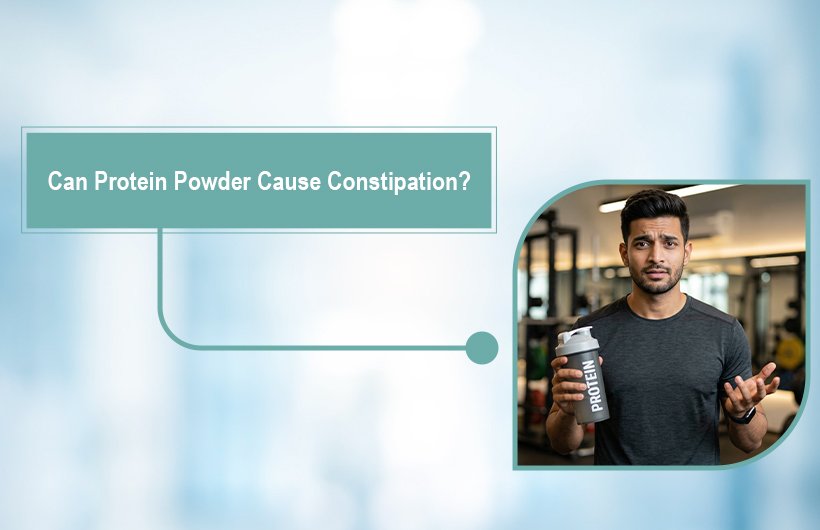
Protein powders have become a daily staple for gym-goers, fitness enthusiasts, and anyone trying to meet their protein goals. But along with benefits like muscle recovery and weight management, many users notice an uncomfortable issue: constipation. If you’ve experienced this, you’re not alone. It’s one of the most common digestive complaints among people who regularly consume protein supplements.
Does Protein Powder Cause Constipation?
Yes, protein powder can contribute to constipation in some people but the protein itself is rarely the cause. The most common reasons are low dietary fiber, insufficient water intake, lactose intolerance (with whey or casein proteins), artificial sweeteners, and reduced physical activity. Switching to plant-based protein, increasing fiber and hydration, and staying active can resolve most cases.
Can Protein Powder Cause Constipation?
The simple answer is: it can, but not directly.
Protein powder itself doesn’t usually “cause” constipation. Instead, the issue comes from how your overall diet and lifestyle change when you start consuming more protein. Many people unknowingly reduce fiber-rich foods, drink less water than required, or use protein powders that don’t suit their digestive system.
Think of it this way: your gut needs a balance of protein + fiber + water + movement to function properly. When protein intake increases without adjusting the others, digestion slows down.
5 Reasons Protein Powder Can Cause Constipation
1. Low Fiber Intake
Most protein powders, especially whey and casein, contain little to no fiber. When people increase protein intake, they often reduce carbohydrates like fruits, vegetables, and whole grains.
Why this matters:
- Adds bulk to stool
- Feeds good gut bacteria
- Keeps food moving through your intestines
- Prevents hard, dry, difficult-to-pass stools
Practical tip: Add fiber-rich foods like oats, seeds, or fruits to your shake
2. Dehydration
Protein metabolism is water-intensive. Your body uses more water to process high protein intake, and if you don’t compensate, it pulls water from your intestines, hardening your stool.
Signs you’re dehydrated from protein intake:
- Dry, pellet-like stools
- Straining during bowel movements
- Feeling full and bloated without passing stool
Fix: Drink a minimum of 2.5-3 litres of water daily. Add an extra 500ml for every hour of exercise.
3. Lactose Intolerance (Whey & Casein Users)
An estimated 65–75% of the world’s adult population is lactose intolerant MindBodyGreen, many without even knowing it. Whey concentrate and casein are both dairy-derived and contain moderate levels of lactose.
In lactose-intolerant users this causes:
- Bloating and trapped gas
- Sluggish or disrupted gut motility
- Alternating constipation and loose stools
Fix: Switch to whey isolate (most lactose removed) or a fully plant-based protein if you suspect dairy is the issue.
4. Artificial Sweeteners & Sugar Alcohols
Many protein powders contain sucralose, aspartame, sorbitol, or xylitol to keep calories low. These additives can disrupt your gut microbiome and slow intestinal contractions, directly contributing to constipation.
Fix: Read ingredient labels. Choose “clean label” protein powders with fewer than 8 ingredients and no sugar alcohols.
5. Sedentary Lifestyle
Physical activity literally squeezes your intestines and stimulates bowel contractions (peristalsis). Many people use protein powder while spending long hours seated at a desk or during recovery, which significantly slows digestion.
Fix: A 20-30 minute walk daily is enough to meaningfully improve gut motility.
Which Types of Protein Powder Are Most Likely to Cause Constipation?
| Protein Type | Fiber | Lactose | Constipation Risk | Best For |
|---|---|---|---|---|
| Whey Concentrate | None | Moderate | ⚠️ Moderate | General users, no dairy issues |
| Whey Isolate | None | Very Low | ✅ Low | Lactose-sensitive users |
| Casein | None | Moderate | ⚠️ Moderate | Night-time use |
| Pea Protein | Moderate | None | ✅ Low | Vegan, sensitive digestion |
| Hemp Protein | High | None | ✅ Very Low | High-fiber diets |
| Rice Protein | Low–Moderate | None | ✅ Low | Sensitive digestion |
| Egg White Protein | None | None | ✅ Very Low | Dairy-free, high bioavailability |
Plant-based proteins—especially hemp and pea—are the most gut-friendly options for people prone to constipation.
Does Whey Protein Specifically Cause Constipation?
This is one of the most searched questions on this topic. Whey protein powder may cause constipation due to low fiber, dehydration, and dairy sensitivity. Whey concentrate is the most problematic form; whey isolate is processed to remove most lactose and is better tolerated by sensitive users.
How to Prevent Constipation When Taking Protein Powder
Here are practical, proven fixes you can start today:
✔ Increase Fiber Intake
- Include vegetables, fruits, and whole grains daily
- Add fiber boosters to your shakes
✔ Stay Hydrated
- Drink 2–3 liters of water daily
- Increase intake if you’re working out
✔ Choose the Right Protein
- Switch to whey isolate or plant-based protein
- Avoid heavily processed powders
✔ Limit Artificial Sweeteners
- Look for clean-label protein powders
- Avoid sugar alcohol-heavy formulas
✔ Stay Active
- Regular movement improves gut motility
- Walking, yoga, or light exercise helps
✔ Add Probiotics
- Include foods like:
- Yogurt
- Buttermilk
- Fermented foods
✔ Introduce Protein Gradually
- Avoid sudden high intake
Let your digestive system adjust slowly
What to Eat With Protein Powder to Improve Digestion
Adding fiber-rich foods to your protein shake can make a big difference:
| Add-In | Fiber | Extra Benefit |
|---|---|---|
| Chia seeds (1 tbsp) | ~5g | Softens stool, omega-3 rich |
| Flaxseed (1 tbsp) | ~2–3g | Natural mild laxative effect |
| Oats (½ cup) | ~4g | Prebiotic, feeds good gut bacteria |
| Banana | ~3g | Easy digestion, potassium-rich |
| Spinach (1 cup) | ~2g | Nutrient dense, blends easily |
| Berries (½ cup) | ~2–4g | Antioxidants, gut-friendly |
Simple hack: Turn your protein shake into a balanced mini-meal instead of just protein + water.
How to Stop Constipation From Protein Powder: 7-Step Plan
- Increase fiber—target 25–35g of dietary fiber daily from whole foods
- Drink more water—2.5–3 liters minimum; more if you exercise
- Switch protein type—try whey isolate or plant-based if you use whey concentrate or casein
- Eliminate sugar alcohols—check labels for sorbitol, xylitol, maltitol
- Move daily—20–30 minutes of walking stimulates peristalsis
- Add probiotics—yogurt, buttermilk, kefir, or fermented foods support gut bacteria
- Introduce protein gradually—don’t jump from 60g to 200g overnight; let your gut adapt
How Long Does Constipation From Protein Powder Last?
For most people, symptoms resolve within 2–4 days once fiber, hydration, and protein type are corrected. If constipation persists beyond 2 weeks despite changes, see a doctor.
When to See a Doctor About Constipation
Occasional constipation is common and usually manageable. But you should consult a doctor like Dr. Varun Bajaj if:
- Constipation lasts more than 2 weeks
- You notice blood in stool
- There is severe abdominal pain
- You experience unexplained weight loss
- Symptoms worsen despite dietary changes
Persistent digestive issues may require medical evaluation.
Conclusion
So, can protein powder cause constipation? Yes, but usually indirectly. The real issue lies in low fiber intake, dehydration, dairy sensitivity, or lifestyle factors.
The good news is that you don’t have to stop using protein powder. With a few smart adjustments like choosing the right protein, staying hydrated, and adding fiber, you can enjoy the benefits without digestive discomfort.
If symptoms persist, it’s always best to consult a gastrointestinal surgeon in Ahmedabad like Dr Varun Bajaj for personalised guidance.
FAQs
Can protein powder cause constipation even if I drink enough water?
Yes, if your fiber intake is still low, hydration alone won’t fully prevent it. Both fiber AND water are required.
Is plant-based protein powder better for constipation?
Generally yes. Plant-based protein powders often contain more fiber and are easier to digest, making them a better option for people prone to constipation.
What’s the best protein powder if I have constipation?
Hemp protein (highest fiber), pea protein, or whey isolate (lowest lactose) are your best starting points.
Can I take protein powder every day without getting constipated?
Yes, as long as your overall diet includes adequate fiber (25–35g/day), sufficient water (2.5–3L/day), and you stay active.
Does protein powder cause constipation in children or teens?
Protein powder isn’t generally recommended for children. Consult a gastro specialist before use.
This article is for informational purposes only and does not substitute professional medical advice. Consult Dr. Varun Bajaj or a qualified healthcare provider for personalised diagnosis and treatment.