
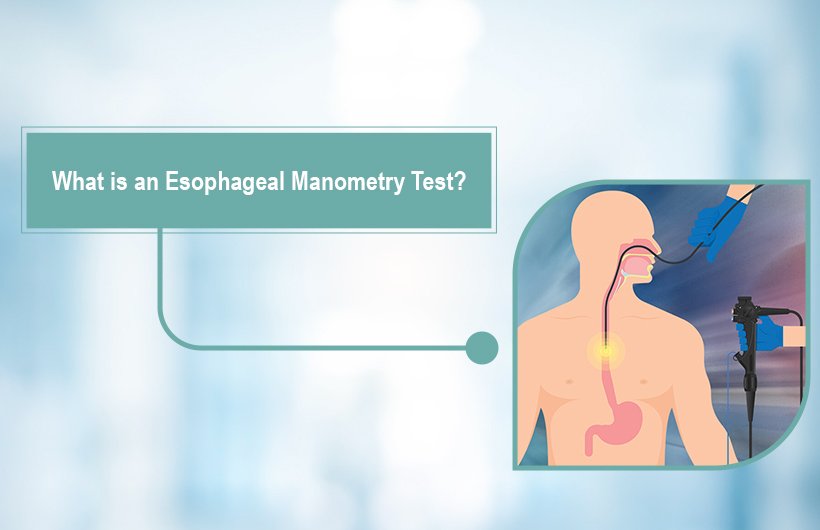
If your doctor has recommended an esophageal manometry test, it’s completely normal to feel a bit anxious, especially when you hear that a thin tube will be passed through your nose. The good news is that the procedure is a commonly performed, short, and usually tolerable test that provides very important information about how your swallowing muscles work. Understanding what to expect can make the entire experience much easier and less stressful.
What is an Esophageal Manometry Test and What Does It Detect?
An esophageal manometry test is a diagnostic procedure that measures the pressure and muscle coordination of the esophagus. A thin, flexible catheter is passed through the nose into the stomach, and sensors record how the esophageal muscles contract as the patient swallows. It is used to diagnose swallowing disorders, achalasia, and other esophageal motility conditions. The test takes 15–30 minutes and is performed while the patient is fully awake.
What is an Esophageal Manometry Test?
An esophageal manometry test (also called an esophageal motility test) is used to evaluate how well your esophagus the muscular tube that carries food from your throat to your stomach is working.
Every time you swallow, your esophagus performs a coordinated series of muscle contractions called peristalsis, while the upper and lower esophageal sphincters (UES and LES) open and close properly. This test measures:
What the Test Measures:
- Muscle contraction strength
- Coordination of swallowing
- Pressure inside the esophagus
- Function of the lower esophageal sphincter (LES)
Why is an Esophageal Manometry Test Done?
Your doctor may recommend an esophageal manometry test if you are experiencing symptoms that cannot be explained by other tests, such as endoscopy or a barium swallow.
Common Symptoms:
- Difficulty swallowing (dysphagia)
- Persistent acid reflux (GERD)
- Heartburn not improving with treatment
- Chest pain not related to the heart
- Regurgitation of food
Conditions It Helps Diagnose
| Condition | What It Means | How Manometry Detects It |
| Achalasia | LES fails to relax, preventing food entry to stomach | High LES pressure; absent or incomplete relaxation |
| Diffuse Esophageal Spasm | Uncoordinated, simultaneous muscle contractions | Simultaneous contractions detected along esophageal body |
| Ineffective Esophageal Motility | Weak or absent peristaltic contractions | Low-amplitude or absent wave patterns |
| Hypertensive LES | LES pressure is too high, restricting food passage | Elevated resting LES pressure measurement |
| Nutcracker Esophagus | Abnormally high-amplitude contractions | Excessive contraction pressures recorded |
This test is also often done before anti-reflux surgery or to correctly position probes for other tests like 24-hour pH monitoring.
High-Resolution Esophageal Manometry (HRM) – What’s the Difference?
Modern hospitals often use high-resolution manometry (HRM), which is an advanced version of the standard test.
Key Differences:
- Uses a catheter with many closely spaced sensors
- Provides more detailed pressure mapping
- Offers clearer diagnosis of complex motility disorders
In simple terms, HRM gives your doctor a more precise and complete picture of how your esophagus is functioning.
How to Prepare for an Esophageal Manometry Test
Proper preparation is important to ensure accurate results.
Fasting
- Do not eat or drink for 4–8 hours before the test
- Exact duration depends on your doctor’s instructions
Medications
Some medications can affect esophageal movement and may need to be paused.
These may include:
- Blood pressure medicines (like calcium channel blockers)
- Nitrates
- Prokinetic drugs
- Sedatives
- Opioids
Always follow your doctor’s instructions – do not stop any medication on your own.
Other Tips
- You may take essential medicines with a small sip of water (if advised)
- Wear comfortable clothing
- No sedation is given, you must stay awake to follow swallowing instructions
How is the esophageal manometry test done? Step by Step
What Happens During the Test:
- Numbing gel is applied to your nose
- A thin catheter is inserted through your nostril
- You swallow water as instructed
- Sensors record muscle activity
- Tube is gently removed
Duration: 15–30 minutes
What Does the Test Feel Like?
- Mild discomfort during insertion (30–60 seconds)
- Slight gagging sensation
- Normal breathing and talking after placement
- Mild throat irritation afterward
Most patients find it uncomfortable but manageable
Esophageal Manometry Test Results
Normal Results:
- Smooth, coordinated muscle contractions
- Proper opening and closing of the LES
- Food passes easily
Abnormal Results
Depending on the pattern observed, results may indicate:
- Achalasia – LES does not relax properly
- Esophageal spasms – irregular contractions
- Weak peristalsis – poor muscle movement
- High LES pressure – difficulty passing food
Results usually take a few days to 2 weeks
After the Test Recovery and Next Steps
The recovery is simple and quick.
What You Can Do Afterwards
- Resume normal eating and drinking
- Return to daily activities immediately
- Drive yourself home (no sedation used)
Temporary Side Effects
You may experience:
- Mild sore throat
- Nasal irritation
- Rare minor nosebleed
These usually settle within a few hours.
When to Contact Your Doctor
- Persistent pain
- Difficulty swallowing after the test
- Bleeding that doesn’t stop
How Much Does an Esophageal Manometry Test Cost?
The esophageal manometry test price can vary depending on the country, hospital, and technology used.
Estimated Cost Range:
- India: ₹2,000 to ₹8,000
Factors Affecting Cost:
- Hospital type
- Technology (HRM vs standard)
- Additional tests
- Insurance coverage
Always check with your hospital or insurance provider for exact pricing.
Risks and Side Effects
This is a safe, low-risk procedure.
Common Side Effects:
- Mild throat irritation
- Nasal discomfort
- Slight gagging
Rare Complications:
- Nosebleed
- Vomiting
Conclusion
An esophageal manometry test is a valuable and commonly used procedure that helps doctors understand how well your esophagus is functioning. While the idea of a tube passing through your nose can feel intimidating, the test is quick, safe, and usually tolerable, with only mild and temporary discomfort.
If you’ve been advised to undergo this test, the best step is to follow your doctor’s preparation instructions carefully and ask any questions you may have beforehand. This will ensure accurate results and smoother experience.
If you are experiencing symptoms like difficulty swallowing, chronic reflux, or unexplained chest pain, consult a qualified gastroenterologist in Ahmedabad like Dr. Varun Bajaj to understand whether this test is right for you and what your next steps should be.
FAQs
Is the esophageal manometry test painful?
It is not painful but may feel uncomfortable briefly during insertion.
How long does the esophageal manometry test take?
Usually 15–30 minutes.
Can I drive after esophageal manometry test?
Yes, since no sedation is used.
What is the difference between manometry and barium swallow?
- Manometry → measures pressure
- Barium swallow → shows structure