
Gastritis is one of the most common digestive problems today—and surprisingly, emotional stress is one of its major triggers. Many people associate gastritis only with spicy foods, alcohol, or infections, but your mental and emotional health play an equally important role. The connection between gastritis and anxiety is strong, and understanding this link can help you manage symptoms more effectively and protect your long-term digestive health.
This expert guide explains how stress affects your stomach, key symptoms to look for, and the best treatment options recommended by a Gastroenterologist in Ahmedabad, like Dr Varun Bajaj.
What is the Link Between Gastritis and Anxiety?
Your brain and digestive system are constantly connected through a communication pathway called the gut-brain axis. Whenever you feel stressed, anxious, or emotionally overwhelmed, your body releases hormones like cortisol and adrenaline. These hormones prepare you for “fight or flight,” but when they remain elevated for a long time, they begin to disturb normal digestive function.
Here’s how stress and gastritis are connected:
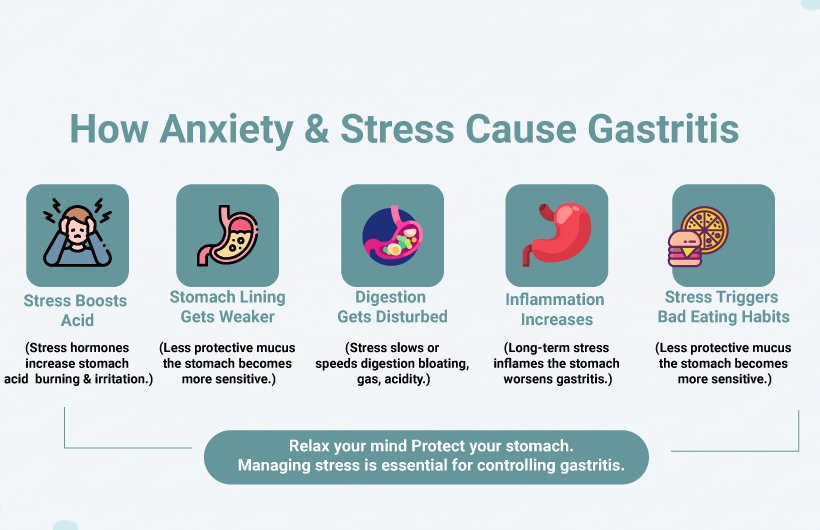
- Increased Stomach Acid Production
Anxiety triggers the release of stress hormones that raise stomach acid levels. Excess acid irritates the stomach lining and may lead to inflammation that eventually develops into gastritis.
- Weakening of the Stomach’s Protective Lining
Chronic stress reduces mucus production in the stomach. Without this protective barrier, the lining becomes sensitive to acidic foods, alcohol, caffeine, and even normal meals.
- Disturbed Digestive Movements
Stress can either slow down or speed up digestion.
-
Slow digestion → bloating, heaviness, gas
-
Fast digestion → acidity, cramps, discomfort
- Increased Inflammation in the Body
Long-term stress increases inflammatory markers, which worsen gastritis and make symptoms more persistent.
- Poor Eating Habits During Anxiety
Skipping meals, overeating, eating too fast, or consuming processed foods are common behaviours during stress. These habits directly worsen gastritis symptoms.
Doctors often see significant improvement when patients manage both digestion and emotional stress together. According to Dr. Varun Bajaj, treating anxiety is essential for complete and long-lasting gastritis recovery.
Symptoms of Stress-Related Gastritis
Stress-induced gastritis often looks similar to regular gastritis, but symptoms tend to worsen during emotionally difficult or stressful periods.
Common Gastritis Symptoms Include:
-
Burning pain in the upper abdomen
-
Bloating, heaviness, or discomfort after meals
-
Nausea or vomiting
-
Acidity or sour burping
-
Early fullness
-
Stomach cramps
-
Loss of appetite
Anxiety Symptoms That May Accompany Gastritis:
-
Restlessness or uneasiness
-
Rapid heartbeat
-
Sleep disturbance
-
Chest tightness
-
Fatigue
-
Irritability
If your digestive discomfort increases during stress or anxiety, it’s a strong sign that your symptoms are linked to emotional triggers.
Can Stress Alone Cause Gastritis?
Yes, stress can cause gastritis even if you have no other stomach-related issues. This condition is known as stress-induced gastritis. It may occur during:
- Major life changes such as job loss, exams, or relationship issues
- Long working hours
- Emotional trauma
- Chronic worry or overthinking
- Lack of sleep
- High-pressure lifestyle
During such times, the stomach lining becomes more sensitive, and even normal foods may cause pain or burning. People with anxiety disorders, panic attacks, or constant stress are more likely to develop this form of gastritis.
How Doctors Diagnose Stress-Related Gastritis
A doctor will:
-
Evaluate your symptoms
-
Review your eating patterns and lifestyle
-
Rule out infections like H. pylori, ulcers, or other diseases
-
Assess your stress levels and emotional health
If no physical cause is found and symptoms worsen during stress, anxiety-related gastritis becomes the likely diagnosis.
Treatment for Gastritis Caused by Anxiety
A combination of medical treatment, lifestyle changes, and stress management provides the best results. Here is the expert-recommended approach by Dr. Varun Bajaj:
1. Medications for Relief
Depending on the severity, your doctor may prescribe:
-
Antacids → For quick symptom relief
-
H2 blockers / PPIs → To reduce acid production
-
Mucosal protectants → To heal the stomach lining
If anxiety is severe, therapy or anxiety-management techniques may be recommended.
2. Stress-Management Techniques
Since anxiety is the root cause, controlling stress is essential for healing.
Effective techniques include:
-
Deep breathing exercises
-
Meditation and mindfulness
-
Yoga
-
Walking and light exercise
-
Taking breaks from screens
-
Spending time outdoors
-
Maintaining proper sleep hygiene
A calm and relaxed mind directly supports digestive healing.
3. Diet Plan for Gastritis Recovery
A gastritis-friendly diet is crucial, especially when symptoms are triggered by stress.
Foods to Include:
-
Oats, porridge, soft khichdi
-
Boiled vegetables
-
Rice and dal
-
Bananas and apples
-
Buttermilk and curd
-
Coconut water
Foods to Avoid:
-
Spicy, oily, and fried foods
-
Coffee, tea, and caffeinated drinks
-
Alcohol
-
Packaged snacks and fast food
-
Citrus fruits and tomatoes
-
Carbonated beverages
Eating small, frequent meals helps prevent acid build-up.
4. Avoid These Triggers to Protect Your Stomach
-
Smoking
-
Midnight snacking
-
Skipping breakfast
-
Eating too fast
-
Overeating during stress
-
Excessive screen time before bed
Fixing these habits can bring noticeable improvement within days.
5. Therapy for Anxiety Management
If emotional stress remains constant, counseling or therapy can be extremely helpful.
A trained therapist can help you:
-
Reduce panic episodes
-
Manage chronic worry
-
Break the cycle of stress-triggered gastritis
-
Develop healthy coping strategies
When Should You See a Doctor?
Seek medical help urgently if you experience:
-
Burning pain lasting more than a week
-
Vomiting blood or black stools
-
Unexplained weight loss
-
Persistent nausea
-
Severe acidity affecting daily life
Treating symptoms early prevents complications like ulcers or chronic gastritis.
How to Prevent Gastritis If You Have Anxiety
Simple lifestyle changes can protect your stomach and reduce anxiety:
-
Eat a light, early breakfast
-
Stay well-hydrated
-
Avoid emotional eating
-
Practise daily journaling
-
Maintain a regular sleep routine
-
Track trigger foods
-
Take short breaks during stressful work
-
Prioritise mental wellness
Prevention becomes much easier when you support both your gut and your mind.
Conclusion
The link between gastritis and anxiety is powerful but often overlooked. Stress affects hormones, digestion, and the stomach lining—making gastritis more frequent and harder to treat. With the right combination of medical care, dietary modifications, and stress-management techniques, most people recover fully.
If you experience repeated acidity, stomach burning, or symptoms that worsen during stress, consult an expert like Dr. Varun Bajaj to identify the root cause and receive the right treatment.
Caring for your mind is just as important as caring for your stomach, because both are deeply connected.